
Best Pill Reminder Apps 2026: Medisafe & 5 More
Pill reminder apps compared: Medisafe, MyTherapy, Apple Health, EveryDose, and DoneDose. Plus what to use now that Round Health is gone.
Published 2026-02-22Updated 2026-10-1610 min read
By Ben — Builder of DoneDose, software engineer and peptide user
This page has not been clinically reviewed.
Educational content only. This guide is not medical advice and does not replace care from a licensed clinician.
On this page
- Why Most Pill Reminder Apps Fail You
- What to Look for in a Pill Reminder App
- One-Tap Confirmation
- Flexible Scheduling
- Adherence History
- Missed-Dose Awareness
- Five Pill Reminder Apps, Honestly Compared
- Medisafe
- MyTherapy
- Apple Health (Medications)
- EveryDose
- DoneDose
- Building a Reminder System That Actually Sticks
- Anchor to an Existing Habit
- Keep Your Meds Visible
- Use the "Two-Minute Rule"
- Review Your Adherence Weekly
- When You're Managing More Than Just Pills
- Going Digital: Why Your Phone Beats Paper and Memory
- Frequently Asked Questions
- Do pill reminder apps actually improve adherence?
- What's the difference between a pill reminder and a medication tracker?
- Can a pill reminder app help with injectable medications too?
- Should I still use a physical pill organizer alongside an app?
Quick answer: Medisafe is the most-downloaded and most polished reminder app. MyTherapy is the strongest free option, on iPhone and Android. If you have an iPhone, Apple Health already has one built in. EveryDose is free and built for caregiver sharing. DoneDose fits regimens that mix daily pills with injections. See the full comparison.
The best pill reminder app isn't the one with the flashiest interface or the most downloads — it's the one you'll actually use three months from now. I've seen people cycle through four or five reminder apps in a single year, and every time, the pattern is the same: they download it with good intentions, set up a few alarms, and quietly abandon it within weeks because the app treated medication like a calendar event instead of a health behavior.
If you're taking daily medications — whether it's blood pressure pills, thyroid hormones, antidepressants, or a handful of supplements — you already know the frustration. The alarm goes off, you're in the middle of something, you swipe it away, and two hours later you're standing in the kitchen thinking, "Did I take it this morning or am I remembering yesterday?"
That moment of doubt is more than annoying. It's a real barrier to staying healthy.
Let's cut through the noise and talk about what actually makes a pill reminder app worth keeping on your phone.
Why Most Pill Reminder Apps Fail You
Here's the uncomfortable truth: the majority of medication reminder apps are built like alarm clocks with a pill icon slapped on top. They ping you at a set time, and that's about it. No confirmation that you actually took the dose. No way to look back and see your track record. No intelligence around what happens when you miss one.
The World Health Organization estimates that medication adherence for chronic conditions averages only about 50% in developed countries. That's not because people don't care — it's because the systems around them aren't designed for real human behavior. You get busy. You get distracted. You travel and your routine falls apart. A good app has to account for all of that.

The problem with most reminder apps isn't the reminder — it's what happens after the reminder fires. If the app doesn't capture whether you actually took the dose, it's just noise in your notification tray.
The apps that stick are the ones that close the loop. They don't just tell you it's time — they ask you to confirm, they log the result, and they give you something useful to look at when your doctor asks, "Have you been taking your medications consistently?"
What to Look for in a Pill Reminder App
Not all features are created equal. After years of watching people struggle with adherence, I've found that a handful of capabilities separate the apps that work from the ones that collect dust. Here's what actually matters:
One-Tap Confirmation
If logging a dose takes more than a single tap, you won't do it consistently. The best apps let you confirm directly from the notification — no unlocking, no navigating, no friction. You see the reminder, you tap "taken," and you move on with your life.
Flexible Scheduling
Not every medication follows a neat "once at 8 AM" pattern. Some are twice daily, some are every other day, some are weekly injectables. The app needs to handle all of these without making you feel like you're programming a VCR.
Adherence History
A reminder without a record is forgettable. You need to see your history — which days you hit, which you missed, whether there's a pattern to your lapses. This isn't about guilt. It's about information that helps you and your doctor make better decisions.
Missed-Dose Awareness
What happens when you don't confirm? A good app should follow up — not with ten annoying pings, but with a clear "you haven't logged this yet" that respects your time while still keeping the record accurate.
| Feature | Why It Matters | Red Flag If Missing |
|---|---|---|
| One-tap logging | Removes friction from the daily habit | You'll skip logging when busy |
| Flexible schedules | Supports real-world regimens (weekly, PRN, twice daily) | Only works for simple once-daily pills |
| Adherence history | Gives you and your doctor a clear picture | No way to prove consistency at appointments |
| Missed-dose alerts | Catches gaps before they become patterns | Silent failures pile up unnoticed |
| Multi-medication support | Handles your full regimen in one place | Forces you to use multiple apps |
| Caregiver sharing | Lets family or caregivers stay in the loop | Isolates you from your support network |
The best medication system isn't the most sophisticated one — it's the one with the least friction between "I should take this" and "I did take this, and there's a record to prove it."
Five Pill Reminder Apps, Honestly Compared
Here are the apps people actually use to stay on top of daily medications in 2026 -- what each does well, where each falls short, and the routine each fits best.
| App | Core Strength | Adherence History | Caregiver Sharing | Injection Support | Platform | Price |
|---|---|---|---|---|---|---|
| Medisafe | Polished reminder UI, "Med-friend" feature | Yes | Yes | Limited | iOS, Android | Free with premium |
| MyTherapy | Free, full-featured, cross-platform | Yes | Yes | Basic logging | iOS, Android | Free |
| Apple Health | Built into iPhone, follow-up reminders | Yes | Yes (Health Sharing) | No | iOS | Free |
| EveryDose | Free, caregiver list sharing | Yes | Yes | No | iOS | Free |
| DoneDose | Pills + injectables in one tracker | Yes | No | Full (with body map) | iOS | Free with premium |
Looking for Round Health, Mango Health, or CareZone? All three are no longer available in the App Store (see Round Health alternatives). Round Health's schedule-window reminders don't have an exact replacement; Apple Health's follow-up reminders come closest for catching a dose you slid past. If you used CareZone to manage a parent's medications, EveryDose or Medisafe's Med-friend covers the caregiver side.
Medisafe
Medisafe is the most-downloaded medication reminder app for good reason -- the reminder flow is well-tuned, you can confirm doses from the lock screen, and the "Med-friend" feature loops in a family member who gets a ping if you miss. Pill recognition with your phone camera is a nice touch when you're setting up a new prescription.
Honest weakness: The free tier shows ads and the in-app upsells are aggressive. Injection tracking exists but is essentially a checkbox -- no site rotation, no body map.
MyTherapy
MyTherapy is free and remarkably capable -- adherence reports you can email to a provider, support for inhalers and measurements, basic injection logging. It's the strongest free option in this list and runs on both iOS and Android.
Honest weakness: Injection-specific features are basic. The interface is functional rather than delightful. If you're managing a complex injectable protocol, you'll outgrow it.
Apple Health (Medications)
If you have an iPhone, you already have a pill reminder. The Medications section of the built-in Health app (iOS 16 and later) handles schedules, lets you log each dose as taken or skipped, and flags potential interactions between the drugs on your list.
Turn on Follow Up Reminders and it pings you again if a dose isn't logged 30 minutes after its scheduled time, with an optional Critical Alert that sounds even when your phone is muted. You can share your medication list with a family member through Health Sharing, and it works on Apple Watch.
Honest weakness: iPhone only, and it has no concept of injections -- no site rotation, no route-specific logging.
EveryDose
EveryDose is a free reminder app with a strong caregiver angle: build your medication list from its drug database, mark doses taken, skipped, or snoozed from the notification, and share the list with a family member in one tap. It also alerts you when a newly added medication may interact with something already on your list.
Honest weakness: No injection support. It's built around pills and supplements, so injectables get no site rotation or route-specific logging.
DoneDose
DoneDose is the only app in this list built injection-first -- with a visual body map for site rotation and the same one-tap logging as the pill-focused options. If your regimen mixes daily pills with weekly injectables (TRT, GLP-1s, peptides, biologics), it handles both routes natively rather than forcing you to maintain two apps.
Honest weakness: iOS only at the moment. Doesn't have Medisafe's pill-photo recognition or Apple Health's built-in interaction checks -- it's optimized for accuracy and history, not novelty features.
Building a Reminder System That Actually Sticks
Finding the right app is step one. Making it part of your daily routine is where real adherence lives. I've seen firsthand that the people who stay consistent aren't relying on willpower — they've built a system that works even on bad days.
Anchor to an Existing Habit
Don't set your pill reminder for some arbitrary time. Tie it to something you already do every single day — brushing your teeth, making coffee, sitting down for lunch. The reminder becomes a nudge within a routine you've already established, not an interruption from nowhere.
Keep Your Meds Visible
This sounds almost too simple, but it's one of the most effective strategies I've found: put your medications where you'll see them at the moment the reminder fires. If your alarm goes off at breakfast, your pills should be on the kitchen counter — not in a bathroom cabinet you won't walk past for another hour.
Use the "Two-Minute Rule"
When the reminder fires, take the pill within two minutes. Don't tell yourself you'll do it after this email, after this meeting, after this episode. The longer you wait, the more likely the dose gets forgotten entirely. Two minutes. That's the window.
Review Your Adherence Weekly
Set aside two minutes on Sunday to look at your week. Most good apps show you a calendar or percentage view. You're not looking for perfection — you're looking for patterns. Do you always miss your Thursday evening dose? Maybe that's the night you have a standing commitment and need to shift the time.
Adherence isn't about being perfect. It's about catching your patterns early enough to adjust before small misses become big gaps. A weekly two-minute review does more than a month of good intentions.
When You're Managing More Than Just Pills
Here's where many reminder apps fall short: they assume your entire medication life is daily oral pills. But if you're on a regimen that includes injectables — TRT, GLP-1 medications like semaglutide, or peptide protocols — you need an app that understands the difference between taking a pill and administering an injection.
Injectable medications come with their own tracking needs:
- Injection site rotation — you need to know where your last injection went so you don't keep hitting the same spot, which can cause tissue damage or reduce absorption.
- Weekly or biweekly schedules — these don't fit neatly into a "daily at 9 AM" model.
- Reconstitution tracking — if you're working with peptides, you need to know when you mixed a vial and how many doses remain.
If your regimen includes both oral and injectable medications, look for a guide on combining oral and injectable medication tracking to make sure nothing slips through the cracks. And if you're specifically managing injection rotations, a dedicated injection site rotation guide can help you establish the right pattern from day one.
Going Digital: Why Your Phone Beats Paper and Memory
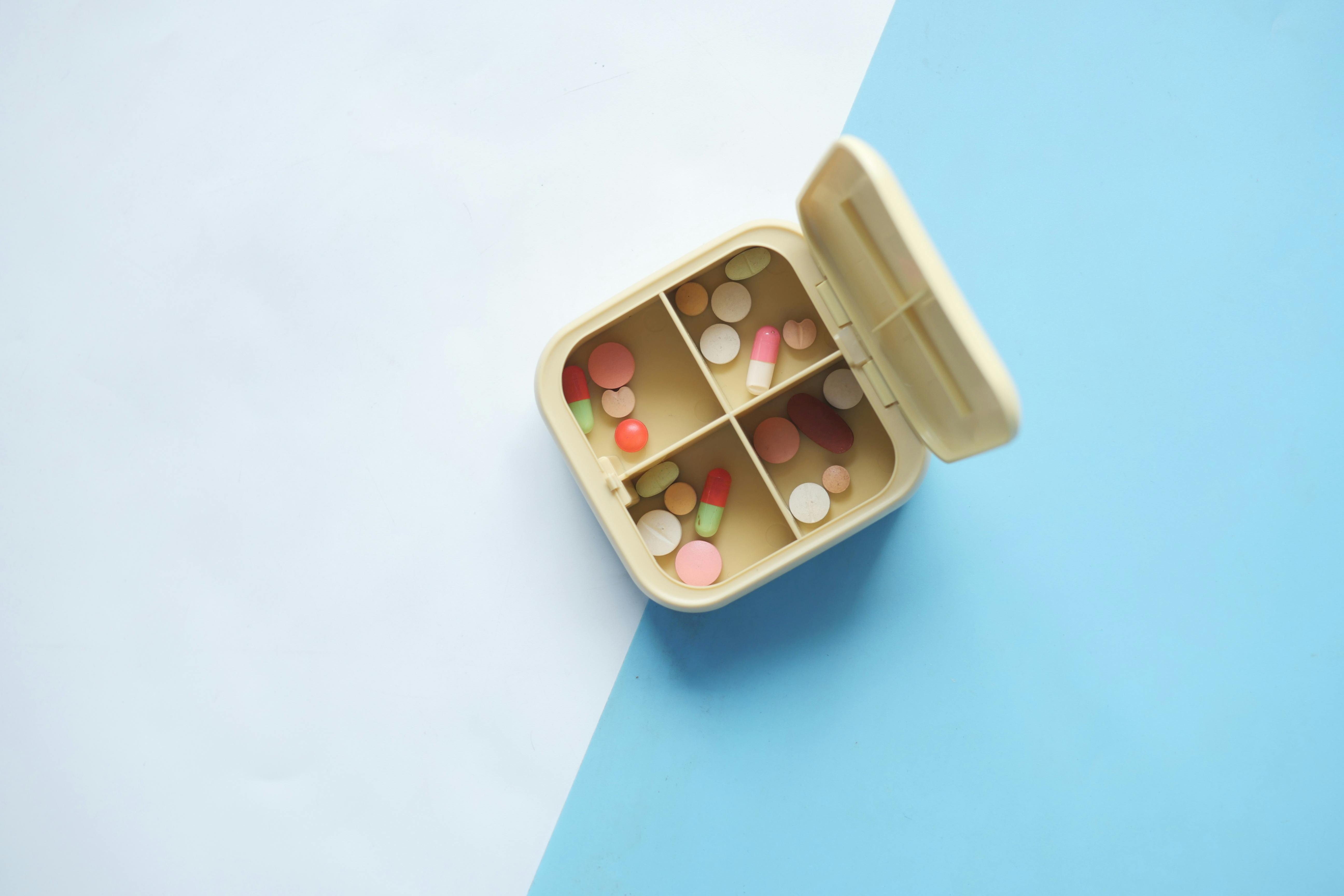
I'm not here to knock the classic pill organizer — those weekly AM/PM trays have helped millions of people. But they have real limitations. They can't tell you when you took something, only whether the compartment is empty. They don't travel well. And they definitely can't alert your spouse or caregiver that you missed your afternoon dose.
A solid pill reminder app fills all those gaps. Your phone is already with you everywhere, and a purpose-built app turns it into a medication command center that a plastic tray simply can't match.
With Done Dose, for example, you tap one button to confirm a dose — the app immediately updates your "last taken" time and logs it to your adherence history. If you're managing injections, it tracks your rotation sites so you never have to guess where your last shot went.
The real power is in the history. When you walk into your doctor's office and they ask how your adherence has been, you don't have to guess or say "pretty good, I think." You pull up your log and show them exactly what happened — which days you hit, which you missed, and what time you typically take each dose. That kind of data changes the conversation from vague reassurance to informed decision-making.
A pill organizer tells you the compartment is empty. An app tells you it was emptied at 7:42 AM, that you've hit 94% adherence this month, and that you tend to miss on weekends. That's the difference between a tool and a system.
If you're building out a broader medication management system, a good medication schedule template can help you map out your full regimen before you set up your app — think of it as the blueprint that makes your digital setup airtight.
Frequently Asked Questions
Do pill reminder apps actually improve adherence?
Yes — and there's research to back it up. A meta-analysis of 16 trials in JAMA Internal Medicine found that text-message reminders roughly doubled the odds of people with chronic conditions taking their medication as prescribed, though most trials were short and relied on self-report. We think the reminder alone isn't the whole story — it's the combination of reminders with logging and feedback loops that keeps people consistent over time.
What's the difference between a pill reminder and a medication tracker?
A pill reminder sends you an alert. A medication tracker logs whether you actually took the dose, when you took it, and builds a history over time. The best pill reminder app does both — it reminds and records, giving you a complete picture rather than just a daily ping.
Can a pill reminder app help with injectable medications too?
Some can, but most can't. If you're on TRT, GLP-1 medications, or peptide protocols, look for an app that supports injection site rotation, flexible scheduling beyond daily doses, and the ability to log injection-specific details. A standard pill-only app will leave you tracking half your regimen on paper.
Should I still use a physical pill organizer alongside an app?
There's no reason you can't use both. The organizer pre-sorts your doses, and the app confirms and logs when you actually take them. Together, they're more reliable than either one alone — the organizer handles the physical prep, and the app handles the accountability.
Done Dose was built for exactly this — a best pill reminder app that handles one-tap logging, scheduled reminders, and a complete adherence history. Whether you're managing daily pills, weekly injections, or a complex multi-medication regimen, it's designed to be the last reminder app you download. See how Done Dose can simplify your medication routine.