
Testosterone Dose Calculator: mg to mL for TRT
Convert your prescribed testosterone dose from mg to mL and insulin syringe units, with split-dose math for 1 to 7 injections a week.
Published 2026-03-01Updated 2026-10-1812 min read
By Ben — Builder of DoneDose, software engineer and peptide user
Medically reviewed by Robert Cauthorne, MD, on October 12, 2026.
Educational content only. This guide is not medical advice and does not replace care from a licensed clinician.
Testosterone dose calculator
Enter the numbers from your prescription and vial label. This converts your dose into the volume to draw; it doesn't suggest a dose.
How often do you inject?
Units apply to U-100 insulin syringes, common for SubQ injections (1 unit = 0.01 mL). For IM injections with a standard syringe, read the mL line. Check your dose with your prescriber or pharmacist if anything doesn't match.
On this page
- Quick Reference: mg to mL
- How Doctors Determine Your Testosterone Dose
- Common Testosterone Dose Ranges and What They Mean
- Understanding mg vs. mL: The Core of Any Testosterone Dose Calculator
- Weekly Dose to Per-Injection Volume
- Splitting Your Dose: The Case for More Frequent Injections
- Why You Should Never Self-Adjust Your Dose
- Tracking Your TRT Protocol: Where Dose Calculators Meet Real Life
- Putting It All Together: A Responsible Approach to TRT Dosing
To convert a testosterone dose from mg to mL, divide the dose in mg by the vial concentration in mg/mL. A 100 mg dose from a 200 mg/mL vial is 0.5 mL. This guide covers that math, how it changes when you split a weekly dose, and how to read the result on an insulin syringe. It checks the conversion on a dose your prescriber already set. It doesn't choose the dose.
Quick Reference: mg to mL
| Dose | Vial concentration | Volume to draw | Insulin syringe (U-100) |
|---|---|---|---|
| 100 mg | 200 mg/mL | 0.5 mL | 50 units |
| 100 mg | 250 mg/mL | 0.4 mL | 40 units |
| 100 mg | 100 mg/mL | 1.0 mL | 100 units |
| 50 mg | 200 mg/mL | 0.25 mL | 25 units |
Formula: dose (mg) ÷ concentration (mg/mL) = volume (mL). On a U-100 insulin syringe, 1 mL is 100 units, so multiply mL by 100.

How Doctors Determine Your Testosterone Dose
Before we get into calculators and conversions, it's worth understanding what actually goes into a testosterone dosing decision — because it's not as simple as "more is better," and it's definitely not one-size-fits-all.
When a clinician prescribes testosterone replacement therapy, they're looking at a constellation of factors:
- Your bloodwork. Total testosterone, free testosterone, SHBG, estradiol, hematocrit, PSA, and sometimes a full metabolic panel. These labs paint a picture of where you are hormonally and whether TRT is appropriate.
- Your symptoms. Fatigue, low libido, brain fog, loss of muscle mass, mood changes. Numbers matter, but so does how you actually feel.
- Your body composition. A 160-pound man and a 240-pound man won't necessarily get the same amount, even if their labs look similar.
- Your health history. Cardiovascular risk, sleep apnea, prostate health, liver function, blood clotting tendencies — all of these can influence whether TRT is prescribed and at what level.
- The formulation. Testosterone cypionate, testosterone enanthate, cream, gel, pellets — each has different pharmacokinetics, and dosing strategies vary accordingly. Our testosterone cypionate vs enanthate comparison covers the key pharmacokinetic differences between the two most common injectable esters.
Your prescribing clinician is weighing all of these variables against one another. A testosterone dose calculator can help you verify the math on what they prescribed, but it can't replicate the clinical judgment that went into choosing that number.
Most men on injectable TRT start somewhere between 100 mg and 200 mg per week, though some protocols begin lower — around 50 to 80 mg — especially for older patients or those with cardiovascular concerns. Your doctor may adjust your dose after follow-up labs, typically drawn 6 to 8 weeks into treatment, to see how your body is responding.
Common Testosterone Dose Ranges and What They Mean
One of the most searched questions in the TRT space is "what's a normal testosterone dose?" The answer depends entirely on context, but here are the ranges you'll typically see in clinical practice for injectable testosterone cypionate or enanthate:
| Weekly Dose (mg) | Typical Use Case | Injection Volume at 200 mg/mL | Injection Volume at 250 mg/mL |
|---|---|---|---|
| 50–80 mg | Conservative start, older patients, cardiovascular caution | 0.25–0.4 mL | 0.2–0.32 mL |
| 100 mg | Common starting amount for most men | 0.5 mL | 0.4 mL |
| 120–150 mg | Mid-range therapeutic level | 0.6–0.75 mL | 0.48–0.6 mL |
| 160–200 mg | Higher therapeutic range, used for some patients | 0.8–1.0 mL | 0.64–0.8 mL |
A few things to notice here. First, the milligram amount and the milliliter volume are not the same thing — and confusing them is one of the most common errors patients make. Second, the concentration on your vial changes how much liquid you draw. We'll dig into that conversion next.
If you see forums or social media posts from people injecting 300, 400, or 500 mg per week and calling it "TRT," that's not therapeutic replacement — that's a supraphysiological dose. Legitimate TRT aims to restore your levels to the normal physiological range, not exceed it.
Understanding mg vs. mL: The Core of Any Testosterone Dose Calculator
This is where most of the confusion lives, and it's also where a testosterone dose calculator concept is genuinely useful — not for choosing a dose, but for understanding the one you've been given.
Here's the fundamental equation:
Dose (mg) ÷ Concentration (mg/mL) = Volume to inject (mL)
That's it. That's the entire calculator. Let's walk through it.
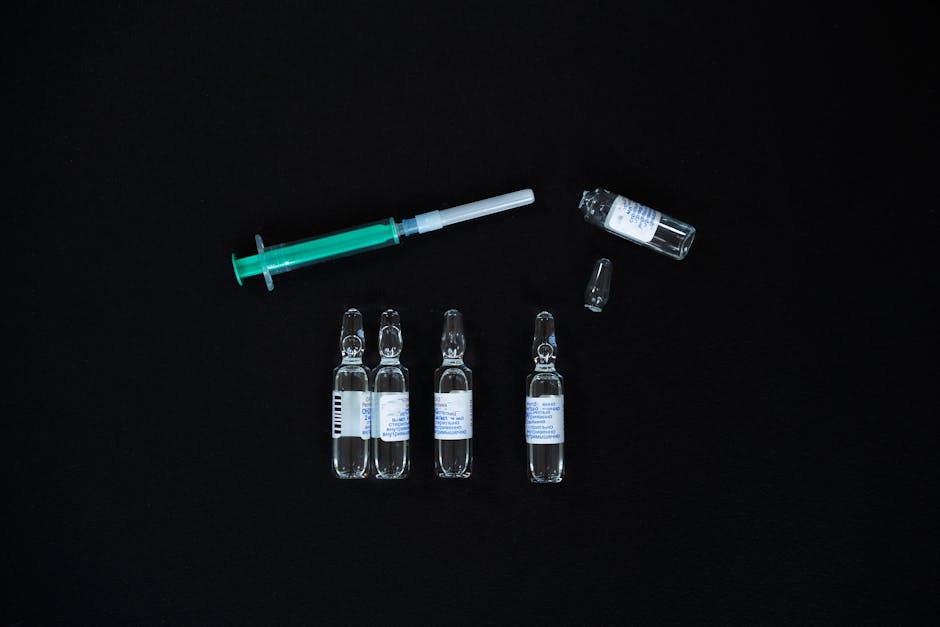
Your testosterone vial has a concentration printed on the label — most commonly 200 mg/mL for testosterone cypionate in the United States, though 250 mg/mL is common for enanthate, and some compounding pharmacies produce 100 mg/mL formulations.
Example 1: Your doctor prescribes 150 mg per week. Your vial is 200 mg/mL.
- 150 ÷ 200 = 0.75 mL per injection (if injecting once weekly)
Example 2: Your doctor prescribes 100 mg per week. Your vial is 250 mg/mL.
- 100 ÷ 250 = 0.4 mL per injection (if injecting once weekly)
Example 3: You switch pharmacies and your new vial is 100 mg/mL instead of 200 mg/mL. The amount is still 100 mg per week.
- 100 ÷ 100 = 1.0 mL — suddenly you're drawing twice the volume for the exact same amount.
That last example is exactly why understanding concentration matters. If you switch vials and don't recalculate, you could accidentally double your dose or cut it in half. When in doubt, call your pharmacist. They will happily walk you through it.
Tip: Every time you pick up a new vial — even a refill of the same prescription — take five seconds to verify the concentration on the label matches what you expect. Compounding pharmacies occasionally change formulations, and manufacturer switches happen at retail pharmacies too.
Weekly Dose to Per-Injection Volume
If your prescription is written per week but you inject more than once a week, divide the weekly dose by the number of injections, then apply the same mg-to-mL formula. This table uses a 200 mg/mL vial. Volumes are rounded; units are on a U-100 insulin syringe.
| Weekly dose | 1x per week | 2x per week | 3x per week | Daily (7x) |
|---|---|---|---|---|
| 100 mg | 100 mg = 0.5 mL (50 units) | 50 mg = 0.25 mL (25 units) | 33 mg = 0.17 mL (17 units) | 14 mg = 0.07 mL (7 units) |
| 150 mg | 150 mg = 0.75 mL (75 units) | 75 mg = 0.375 mL (37.5 units) | 50 mg = 0.25 mL (25 units) | 21 mg = 0.11 mL (11 units) |
| 200 mg | 200 mg = 1.0 mL (100 units) | 100 mg = 0.5 mL (50 units) | 67 mg = 0.33 mL (33 units) | 29 mg = 0.14 mL (14 units) |
At 7 units or 11 units you are reading a tick or two on the barrel, so rounding error is a larger share of the dose. A 0.3 mL or 0.5 mL insulin syringe has finer markings than a 1 mL syringe. For a 250 mg/mL vial, multiply the volumes by 0.8.
Splitting Your Dose: The Case for More Frequent Injections
If you spend any time in TRT communities, you'll hear a lot of talk about "split dosing" — and there's legitimate clinical reasoning behind it.
Traditional TRT protocols often prescribe a single weekly injection. But testosterone cypionate has a half-life of roughly 8 days, and testosterone enanthate is similar. That means a once-weekly injection creates a peak (typically 24 to 48 hours after injection) followed by a gradual decline. Some men feel that decline as a noticeable dip in energy, mood, or well-being toward the end of the week.
Splitting the weekly amount into two injections — typically every 3.5 days — flattens that curve. You get smaller peaks and shallower troughs, which means more stable blood levels throughout the week.
Here's what that looks like mathematically:
- Prescribed dose: 160 mg/week
- Vial concentration: 200 mg/mL
- Single weekly injection: 160 ÷ 200 = 0.8 mL once per week
- Split into two injections: 80 mg per injection → 80 ÷ 200 = 0.4 mL every 3.5 days
The total weekly milligrams stay the same. You're just distributing them more evenly.
Some clinicians also prescribe every-other-day (EOD) protocols, particularly for men using subcutaneous injections with insulin syringes. In that case, the math requires dividing the weekly dose by 3.5 (since there are 3.5 two-day periods in a week):
- Prescribed dose: 140 mg/week, EOD protocol
- Per-injection dose: 140 ÷ 3.5 = 40 mg
- Volume at 200 mg/mL: 40 ÷ 200 = 0.2 mL every other day
Safety: Do not switch from a once-weekly to a split-dose protocol without discussing it with your prescribing provider. Even though the total weekly amount stays the same, changing injection frequency can affect your blood levels and may require different monitoring.
Why You Should Never Self-Adjust Your Dose
Let's be direct about this: understanding how the math works is not the same as being qualified to change what you're taking.
The internet is full of TRT advice from people who treat their hormone panels like a video game — tweaking amounts based on how they feel on any given Tuesday, adding ancillary medications they read about on a forum, chasing a specific number on a lab result. This is a genuinely dangerous approach, and here's why.
Testosterone doesn't exist in a vacuum in your body. When you inject testosterone, your body also converts some of it into estradiol (via aromatase) and dihydrotestosterone (via 5-alpha reductase). Increasing your dose doesn't just raise your testosterone — it shifts the entire hormonal cascade:
- Higher estradiol can cause water retention, mood changes, and gynecomastia.
- Elevated DHT can accelerate hair loss and affect the prostate.
- Increased testosterone can raise hematocrit, thickening your blood and increasing cardiovascular risk.
Your clinician monitors all of these downstream effects. A change that "feels right" to you might be pushing a lab value into a dangerous range that you wouldn't know about without bloodwork.
The goal of TRT isn't to reach the highest testosterone number possible. It's to find the dose where you feel well, your symptoms improve, and your labs remain safe. That's a process of clinical titration — and it belongs in the hands of your medical team.
If you feel like what you're on isn't working, the right move is to schedule follow-up labs and have a conversation with your provider. Bring data — how you've been feeling, when symptoms are better or worse, and your injection log. That kind of information is far more useful to your doctor than "I bumped my dose up 20 mg because a guy on Reddit said I should."
Tracking Your TRT Protocol: Where Dose Calculators Meet Real Life
Understanding your dose is the first step. Tracking it consistently is what actually moves the needle on your health outcomes.
Here's what a good TRT tracking habit looks like:
- Log every injection. Date, time, dose in mg, volume in mL, injection site, and which side. This sounds like a lot, but it takes 30 seconds once you build the habit. If you need a format to follow, our TRT injection log and site rotation guide walks you through it.
- Rotate your sites. Whether you're doing intramuscular or subcutaneous injections, consistent site rotation prevents scar tissue buildup, improves absorption, and reduces discomfort. A tracking app handles this automatically — your memory won't. If you're choosing one, we compared the best TRT tracker apps.
- Note how you feel. Not every day, but at least a brief note on injection days. Energy, mood, sleep quality, libido. These subjective data points are gold when you sit down with your doctor.
- Track your labs. When you get bloodwork, record the results alongside your protocol. Over time, you'll start to see how changes in amount or frequency correlate with changes in your numbers.
- Don't skip the boring stuff. Missed doses happen. Log them too. A gap in your record is more informative than a gap in your memory.
If you're managing TRT alongside other medications — oral prescriptions, supplements, or additional injectables — the complexity multiplies. That's where a system for combining oral and injectable medication tracking becomes essential rather than optional. For the oral side, we compared the best pill reminder apps.
The underlying principle here is medication adherence: taking your medication as prescribed, at the right amount, at the right time. Research consistently shows that adherence is one of the strongest predictors of treatment success, and a tracking system is the most reliable way to maintain it.

Putting It All Together: A Responsible Approach to TRT Dosing
Let's recap what a testosterone dose calculator should and shouldn't be in your life:
It should be:
- A way to verify you're drawing the correct volume for your prescribed dose
- A tool for understanding what happens when your vial concentration changes
- A reference for splitting your prescribed weekly amount into more frequent injections (with your doctor's approval)
- A math check, nothing more
It should not be:
- A way to choose your own amount
- A substitute for bloodwork and clinical oversight
- A justification for self-adjusting because you "feel like" you need more
- Anything that replaces the judgment of your prescribing clinician
TRT is powerful medicine. When dosed correctly and monitored properly, it can be transformative — restoring energy, improving body composition, sharpening cognition, and dramatically improving quality of life. But those benefits depend on getting the protocol right and sticking to it, not on chasing higher numbers.
The patients who get the best results from TRT are the ones who understand their protocol, track it consistently, communicate openly with their provider, and resist the temptation to freelance with their dosing. Be that patient.
If you're looking for a simple, reliable way to track your TRT injections, log your doses, rotate your sites, and keep a clean record for your next doctor's visit, Done Dose was built for exactly this. It handles injection scheduling, site rotation tracking, dose logging, and adherence history — so you can focus on feeling better instead of managing spreadsheets.