
Bacteriostatic Water for Peptides: A Practical Guide
What bacteriostatic water is, how it differs from sterile water and saline, how much to use per peptide vial, and how to store it safely after opening.
Published 2026-05-28Updated 2026-05-289 min read
By Ben — Builder of DoneDose, software engineer and peptide user
This page has not been clinically reviewed.
Educational content only. This guide is not medical advice and does not replace care from a licensed clinician. Many peptides are not FDA-approved for the uses described in research literature -- consult a qualified provider before use.
On this page
If you're reconstituting peptides, bacteriostatic water is almost certainly the solvent you want. It's the standard choice for a reason: it's sterile, it's made for injection, and a single vial keeps bacteria out long enough to draw dose after dose over several weeks. This guide covers what it actually is, how it differs from sterile water and saline, how much to use, and how to store it so the vial you opened three weeks ago is still safe to draw from.
Quick Reference
- Bacteriostatic water = sterile water + 0.9% benzyl alcohol (a preservative). The preservative is the whole point.
- Use it for multi-dose peptide vials you'll draw from repeatedly.
- Common amounts: 1 mL per 2 mg vial, 2 mL per 5 mg vial, 2-3 mL per 10 mg vial. The volume sets the concentration, not the dose.
- Refrigerate after opening. Discard about 28 days after the first puncture.
- Sterile water and saline have no preservative -- fine for single use, risky for a vial you'll reuse.
What Bacteriostatic Water Actually Is
Bacteriostatic water for injection is exactly what the name says: water for injection that has been treated to be bacteriostatic -- meaning it stops bacteria from growing. It does that with 0.9% benzyl alcohol, a preservative that inhibits bacterial replication inside the vial.
That preservative is the only meaningful difference between bacteriostatic water and ordinary sterile water. And it matters more than it sounds. The moment you push a needle through a rubber stopper, you've created a path for microorganisms to get inside. With a preservative, the occasional stray microbe can't multiply into a contaminated solution. Without one, every puncture is a fresh opportunity for bacterial growth in a warm, nutrient-poor but still hospitable liquid.
Because peptides are typically reconstituted as multi-dose vials -- you mix once and draw from the same vial for weeks -- the preservative is what makes that workflow safe.
Bacteriostatic Water vs Sterile Water vs Saline
These three get confused constantly. Here's how they actually differ.
| Solvent | Preservative | Best Use | Multi-Dose Safe? |
|---|---|---|---|
| Bacteriostatic water | 0.9% benzyl alcohol | Reconstituting multi-dose peptide vials | Yes (~28 days) |
| Sterile water for injection | None | Single-dose dilution, used immediately | No |
| 0.9% sodium chloride (saline) | None (standard vials) | Single-dose dilution; some IV uses | No |
Sterile water for injection is exactly what it sounds like: sterilized, with nothing added. It's perfectly fine if you're reconstituting a vial you'll use up in one sitting. But puncture it twice over a week and you've lost the sterility guarantee.
Saline (0.9% sodium chloride) is a sterile salt solution. It's isotonic, which can make an injection feel slightly more comfortable, but standard saline has no preservative either. A few peptides are also less stable in saline than in bacteriostatic water. Unless your peptide's data sheet specifically calls for saline, it's not the default.
The short version: for any peptide vial you'll draw from more than once, use bacteriostatic water.
How Much Bacteriostatic Water to Add
This is the question that trips up beginners, and the answer is freeing once it clicks: the amount you add doesn't change how much peptide you have. A 5 mg vial contains 5 mg of peptide whether you add 1 mL or 3 mL. Volume alone sets the concentration, which determines how many syringe units equal your dose.
Common starting points:
| Vial Size | Typical BAC Water | Resulting Concentration |
|---|---|---|
| 2 mg | 1 mL | 2,000 mcg/mL |
| 5 mg | 2 mL | 2,500 mcg/mL |
| 10 mg | 2 mL | 5,000 mcg/mL |
| 10 mg | 3 mL | 3,333 mcg/mL |
Two rules of thumb when choosing a volume:
- Aim for round insulin-syringe units at your usual dose. If a given water volume means your dose lands on "12.5 units," pick a different volume so it lands on a whole number you can draw without squinting.
- Keep the injection volume small. Subcutaneous injections are comfortable up to about 1 mL, but smaller is better. A more concentrated mix means a tinier, less noticeable injection.
The full mechanics -- including worked mg-to-units math -- live in our peptide reconstitution guide. If you'd rather skip the arithmetic, our free peptide reconstitution calculator takes the vial size, your water volume, and target dose and tells you exactly how many units to draw.
Storing Bacteriostatic Water After Opening
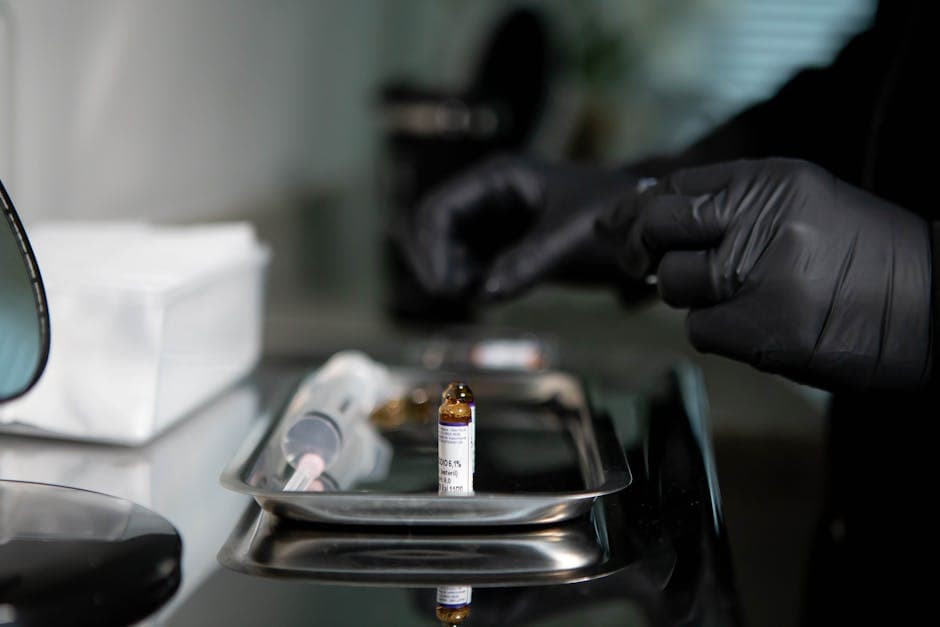
An unopened vial of bacteriostatic water is shelf-stable until its printed expiration date and can be kept at room temperature. Once you've punctured the stopper, the clock starts.
- Refrigerate after first use. Keeping the opened vial cold (36-46°F / 2-8°C) slows any microbial activity and preserves the contents.
- Discard about 28 days after the first puncture. This is the widely used figure for preserved multi-dose vials, and many vials are labeled accordingly.
- Keep the stopper clean. Swab the rubber top with alcohol and let it dry before each draw.
- Inspect before use. Bacteriostatic water should be clear and colorless. Cloudiness, discoloration, or floating particles mean discard it.
Note that the 28-day window applies to the water. Your reconstituted peptide has its own, often shorter, stability window -- most reconstituted peptides last 4-6 weeks refrigerated, and some degrade faster. See how long peptides last and our peptide storage guide for compound-specific timelines.
Is the Benzyl Alcohol Safe?
For most adults reconstituting peptides, benzyl alcohol exposure is minimal. A typical peptide injection is a fraction of a milliliter, so the actual amount of preservative entering your body per dose is tiny.
There are two real caveats worth stating plainly:
- Newborns and infants. Benzyl alcohol is not appropriate for neonates; high cumulative exposure has been linked to serious toxicity in premature infants ("gasping syndrome"). This is a clinical-dosing concern, not a peptide-reconstitution one, but it's the reason preservative-free products exist.
- Known sensitivity. A small number of people are sensitive to benzyl alcohol and may react at the injection site. If that's you, talk to your provider about preservative-free options and single-dose reconstitution with sterile water.
If you're injecting unusually large volumes, or doing so very frequently, the cumulative benzyl alcohol adds up -- another reason to favor a more concentrated mix with a smaller injection volume.
Where People Get Bacteriostatic Water
Bacteriostatic water is a pharmacy item. In a clinical context it's prescribed or supplied alongside the medication being reconstituted (for example, with HCG or compounded peptides from a compounding pharmacy). Availability for non-prescription purchase varies by jurisdiction and changes over time, so we won't make blanket claims here.
What matters from a safety standpoint: get USP-grade bacteriostatic water for injection from a legitimate source. The grade and sterility are the whole reason you're using it instead of tap water. Off-spec or non-sterile "research grade" water defeats the purpose.
Common Mistakes
- Using sterile water for a multi-dose vial. No preservative means bacteria can grow after the first puncture. Use bacteriostatic water for anything you'll reuse.
- Leaving the opened vial at room temperature for weeks. Refrigerate after opening and respect the ~28-day window.
- Adding it too fast. Spraying it directly onto a lyophilized peptide puck can damage it. Run it slowly down the side of the vial -- covered in detail in the reconstitution guide.
- Reusing a needle between the water vial and the peptide vial without re-swabbing. Cross-contamination is avoidable with a fresh swab and a clean technique.
- Guessing the volume. A 0.5 mL error at reconstitution changes every dose afterward. Read the syringe meniscus and measure.
Bacteriostatic water is the unglamorous part of a peptide protocol that quietly determines whether your vial stays safe for the whole month. Use USP-grade bacteriostatic water for multi-dose vials, pick a volume that gives you clean dosing units, refrigerate after opening, and discard at 28 days. Once that's routine, the rest -- mixing, dosing, site rotation, tracking -- follows the same disciplined logic. DoneDose stores your reconstitution details and dose math alongside your injection log, so the numbers you worked out on day one are still there on day twenty.