GLP-1 Medications
Semaglutide (Ozempic/Wegovy): How It Works, Dosing, and Side Effects
A plain-language guide to semaglutide (Ozempic, Wegovy, Rybelsus) — how it works, clinical trial results for weight loss and type 2 diabetes, dosing schedules, side effects, and tracking your treatment.
On this page
- How Semaglutide Works: The GLP-1 Mechanism
- What GLP-1 Does Naturally
- Why This Matters for Weight and Blood Sugar
- What the Clinical Trials Actually Show
- The STEP Trials: Weight Management
- The SUSTAIN Trials: Type 2 Diabetes
- The SELECT Trial: Cardiovascular Protection
- How Semaglutide Compares
- Dosing Schedule and Titration
- Injectable Semaglutide (Ozempic and Wegovy)
- Oral Semaglutide (Rybelsus)
- Common Side Effects and What to Expect
- Gastrointestinal Symptoms
- Less Common but Important
- Why Logging Side Effects Matters
- Why Tracking Your Semaglutide Regimen Changes Everything
- The Adherence Problem Is Real
- What You Should Be Tracking
- What Happens When You Miss a Dose
- Frequently Asked Questions
- What is semaglutide used for?
- How much weight can you lose on semaglutide?
- What are the most common side effects of semaglutide?
- How long does it take for semaglutide to start working?
If you've spent any time reading about weight management or type 2 diabetes treatment in the last few years, you've almost certainly come across semaglutide. Sold under the brand names Ozempic, Wegovy, and Rybelsus, it's become one of the most prescribed and most discussed medications in modern metabolic care — and for good reason. The clinical evidence behind semaglutide is unusually strong for a drug that's generated this much mainstream attention. But strong evidence doesn't mean the conversation around it has been clear or helpful. Between the breathless headlines, the celebrity gossip, and the social media debates, it can be genuinely hard to separate what the data actually shows from what people assume it shows.
This guide is here to fix that. We'll walk through what semaglutide is, how it works in your body, what the major clinical trials found, how dosing works in practice, what side effects to expect, and — critically — why tracking your treatment consistently can make or break your results.
How Semaglutide Works: The GLP-1 Mechanism
To understand why semaglutide is effective, you need to understand what it's mimicking. Semaglutide is a GLP-1 receptor agonist — it copies the action of a hormone your body already makes called glucagon-like peptide-1, or GLP-1 for short.
What GLP-1 Does Naturally
When you eat, your gut releases GLP-1 as part of the normal digestive process. That hormone does several things simultaneously: it signals your pancreas to release insulin, it tells your liver to ease up on glucose production, and it slows gastric emptying so food moves through your stomach more gradually. It also acts on appetite centers in the brain, creating a sense of fullness and reducing the urge to keep eating.
The problem is that natural GLP-1 breaks down in your bloodstream within minutes. It's a fleeting signal. Semaglutide was engineered to resist that breakdown — it has a half-life of approximately one week, which is why a single injection can sustain its effects for seven full days.
Why This Matters for Weight and Blood Sugar
By keeping GLP-1 receptor signaling active around the clock, semaglutide creates a sustained reduction in appetite and a more stable glucose response than your body's own intermittent GLP-1 bursts can achieve. You're not adding something foreign to the system. You're amplifying a signal that was already there — just making it last longer and hit harder.

Semaglutide doesn't introduce a new mechanism into your body. It takes a natural hormone signal that lasts minutes and extends it to last days. That sustained signaling is what makes the clinical results so different from short-acting interventions.
This dual action — appetite regulation in the brain and glucose management in the gut and pancreas — is why semaglutide has been approved for both chronic weight management and type 2 diabetes. It's not two separate drugs repurposed. It's one mechanism that addresses two deeply connected problems.
What the Clinical Trials Actually Show
Semaglutide has one of the strongest clinical trial portfolios of any medication in its class. The data doesn't come from small pilot studies or rodent models — these are large, randomized, placebo-controlled trials in human populations, published in top-tier journals.
The STEP Trials: Weight Management
The STEP (Semaglutide Treatment Effect in People with Obesity) program is the landmark trial series for semaglutide's weight loss indication. STEP 1, published in the New England Journal of Medicine, enrolled nearly 2,000 adults with obesity or overweight plus at least one weight-related condition. The results were striking: participants on semaglutide 2.4 mg weekly lost an average of 14.9% of their body weight over 68 weeks, compared to 2.4% in the placebo group. That's not a marginal difference — it's a categorical shift in what medication-assisted weight loss can look like.
STEP 4 addressed an equally important question: what happens when you stop? Participants who discontinued semaglutide after 20 weeks of treatment regained about two-thirds of the weight they'd lost, while those who continued lost additional weight. This trial is one of the clearest pieces of evidence that semaglutide is a long-term therapy, not a short-term fix. Consistency matters.
The SUSTAIN Trials: Type 2 Diabetes
For type 2 diabetes, the SUSTAIN trial series demonstrated that semaglutide significantly reduced HbA1c — the primary marker of long-term blood sugar control — compared to placebo and several active comparators. SUSTAIN-6 was particularly notable because it also showed a significant reduction in major adverse cardiovascular events, which changed the conversation about semaglutide from "diabetes drug" to "cardiometabolic therapy."
The SELECT Trial: Cardiovascular Protection
The SELECT trial, published in 2023, extended the cardiovascular story beyond diabetes. It studied semaglutide 2.4 mg in adults with overweight or obesity who had established cardiovascular disease but did not have diabetes. The result: a 20% reduction in major adverse cardiovascular events compared to placebo. This was a watershed moment because it demonstrated cardiovascular benefit from a weight management medication independent of diabetes treatment.

The clinical evidence for semaglutide isn't built on a single trial or a single population. It's a body of evidence spanning weight management, diabetes, and cardiovascular protection — each piece reinforcing the others.
How Semaglutide Compares
If you're exploring this space, you may also be reading about tirzepatide, which is a dual GIP/GLP-1 agonist, or keeping an eye on retatrutide, which is still in earlier-stage research. Each has a different evidence profile and mechanism. For a direct head-to-head breakdown, our Ozempic vs Mounjaro comparison covers how semaglutide and tirzepatide differ in practice, and our Wegovy vs Zepbound comparison does the same for the weight-management formulations. Semaglutide's advantage is the sheer depth and breadth of its clinical data — more large-scale trials, more published endpoints, and more years of real-world use than any other GLP-1 agonist currently available.
Dosing Schedule and Titration
One of the most practical things to understand about semaglutide is that you don't start at the full dose. Every formulation uses a gradual titration schedule designed to reduce side effects and let your body adjust.
Injectable Semaglutide (Ozempic and Wegovy)
Both Ozempic and Wegovy are once-weekly subcutaneous injections. The difference is in approved indication and target dose. Here's the standard Wegovy titration schedule:
| Week | Dose | Frequency | Purpose |
|---|---|---|---|
| Weeks 1-4 | 0.25 mg | Once weekly | Initial tolerability |
| Weeks 5-8 | 0.5 mg | Once weekly | First escalation |
| Weeks 9-12 | 1.0 mg | Once weekly | Second escalation |
| Weeks 13-16 | 1.7 mg | Once weekly | Third escalation |
| Week 17 onward | 2.4 mg | Once weekly | Maintenance dose |
Ozempic follows a similar pattern but with a maintenance dose of 1.0 mg or 2.0 mg, depending on your prescriber's assessment. The titration exists for a reason: jumping straight to a full dose dramatically increases the likelihood and severity of gastrointestinal side effects. Patience during this phase pays off.
Oral Semaglutide (Rybelsus)
For a detailed look at the cost landscape for the weight-management formulation, our Wegovy cost guide breaks down pricing, insurance, and savings options. Rybelsus is the oral formulation, taken daily rather than weekly. It starts at 3 mg daily for 30 days, increases to 7 mg, and may go up to 14 mg based on your response. There's an important practical detail with Rybelsus — it needs to be taken on an empty stomach with no more than 4 ounces of plain water, and you need to wait at least 30 minutes before eating, drinking anything else, or taking other oral medications. That timing requirement is real, and it's one of the main reasons people struggle with adherence to the oral form.
Titration isn't optional and it isn't bureaucratic. It's how your body learns to tolerate the medication. Rushing it is the single most common mistake I see people make, and it almost always leads to unnecessary side effects that could have been avoided with patience.
If you're managing an oral medication alongside injectable ones, our guide on combining oral and injectable medication tracking can help you build a system that handles both without confusion.
Common Side Effects and What to Expect
Let's be honest about side effects, because you'll experience at least some of them — and knowing what's normal versus what needs attention makes a real difference in whether you stick with treatment.
Gastrointestinal Symptoms
The most common side effects are GI-related: nausea, diarrhea, vomiting, constipation, and abdominal pain. In the STEP 1 trial, nausea was reported by about 44% of participants on semaglutide compared to 18% on placebo. Here's the important context: these symptoms were overwhelmingly mild to moderate, concentrated in the dose-escalation phase, and tended to diminish over time.
Most people find that nausea peaks in the first few days after each dose increase and fades as your body adjusts at that dose level. This is why the titration schedule exists — each step gives you time to acclimate before the next increase. For a deeper dive into what to expect, our semaglutide side effects guide covers the full spectrum of reported symptoms and how to manage them.
Less Common but Important
Gallbladder events, including gallstones, have been reported at higher rates in semaglutide users, particularly at higher doses and with rapid weight loss. Pancreatitis is listed as a rare but serious potential risk. And there's a boxed warning about thyroid C-cell tumors based on animal studies — though this has not been confirmed in humans, semaglutide is contraindicated in people with a personal or family history of medullary thyroid carcinoma or Multiple Endocrine Neoplasia syndrome type 2.

Why Logging Side Effects Matters
Here's where tracking becomes genuinely useful — not as busywork, but as a tool that helps you and your prescriber make better decisions. If you log your symptoms with even basic structure (what, when after dosing, how severe, how long it lasted), you create a record that reveals patterns. Maybe your nausea is always worst on dose day and gone by day three. Maybe it's getting worse instead of better after a dose increase. That's information your clinician needs to decide whether to hold, reduce, or continue the current titration.
A structured approach to what to track when taking GLP-1 medications weekly takes the guesswork out of this process.
Why Tracking Your Semaglutide Regimen Changes Everything
This is the section most clinical guides skip, and I think it's the most important one. Semaglutide is a powerful medication, but its effectiveness is directly tied to how consistently you take it and how well you manage the practical details around it. The STEP 4 trial proved that discontinuation leads to regain. Adherence isn't a nice-to-have — it's the mechanism by which you maintain results.
The Adherence Problem Is Real
If you've read our guide on what medication adherence actually means, you know that roughly half of people on chronic medications don't take them as prescribed. Weekly injectables add their own layer of difficulty: it's easy to lose track of which day you're supposed to inject, where your last injection site was, and whether your symptoms have been improving or worsening over time.
What You Should Be Tracking
At minimum, every weekly dose should include:
- Date and time of injection
- Dose amount (especially during titration)
- Injection site and side — rotating sites prevents tissue irritation and absorption issues. Our GLP-1 injection site rotation guide breaks this down in detail.
- Side effects within 24-72 hours, with severity and duration
- Next scheduled dose date
If you want to go deeper, track appetite changes, weight trends, and any lifestyle factors (sleep, exercise, hydration) that might correlate with how you're feeling week to week. Over time, this log becomes a decision-making tool — not just a record.
What Happens When You Miss a Dose
Missed doses are inevitable. Life gets in the way. The official guidance for injectable semaglutide is: if your next scheduled dose is more than 2 days away, take the missed dose as soon as you remember. If it's 2 days or fewer until your next dose, skip the missed one and resume your regular schedule. Never double up.
But here's what matters just as much as the clinical guidance: logging the miss. When you track missed doses and the circumstances around them, you start to see patterns — maybe you always miss when you travel, or when your injection day falls on a busy workday. Those patterns are fixable once they're visible. A missed-dose log template gives you a structure for capturing this without overthinking it.
The difference between people who get lasting results from semaglutide and those who don't isn't usually the drug itself — it's the system around the drug. Consistent timing, site rotation, side effect tracking, and honest logging of misses. That's the infrastructure that sustains outcomes.

Frequently Asked Questions
What is semaglutide used for?
As Ozempic and Rybelsus, semaglutide is indicated for type 2 diabetes management. As Wegovy, it's approved for chronic weight management in adults with a BMI of 30 or greater, or 27 or greater with at least one weight-related comorbidity. Your prescriber determines which formulation and dose are appropriate for your situation.
How much weight can you lose on semaglutide?
The STEP 1 trial showed an average of 14.9% body weight loss over 68 weeks at the 2.4 mg dose. But averages mask significant individual variation. Adherence, dietary changes, physical activity, and individual metabolic response all influence outcomes. Semaglutide works best as part of a comprehensive approach, not as a standalone solution.
What are the most common side effects of semaglutide?
Gastrointestinal symptoms dominate: nausea (about 44% in trials), diarrhea, vomiting, and constipation. These are typically most intense during dose escalation and improve as your body adjusts. Serious but less common risks include gallbladder events and pancreatitis. Always report persistent or severe symptoms to your prescriber promptly.
How long does it take for semaglutide to start working?
Many people notice appetite changes within the first couple of weeks, even at the starting dose. But full titration takes 16-20 weeks, and major trials measured primary endpoints at 68 weeks. This is a long-game medication. Setting expectations around months rather than weeks prevents the frustration that leads to premature discontinuation — and as STEP 4 showed, discontinuation leads to regain.
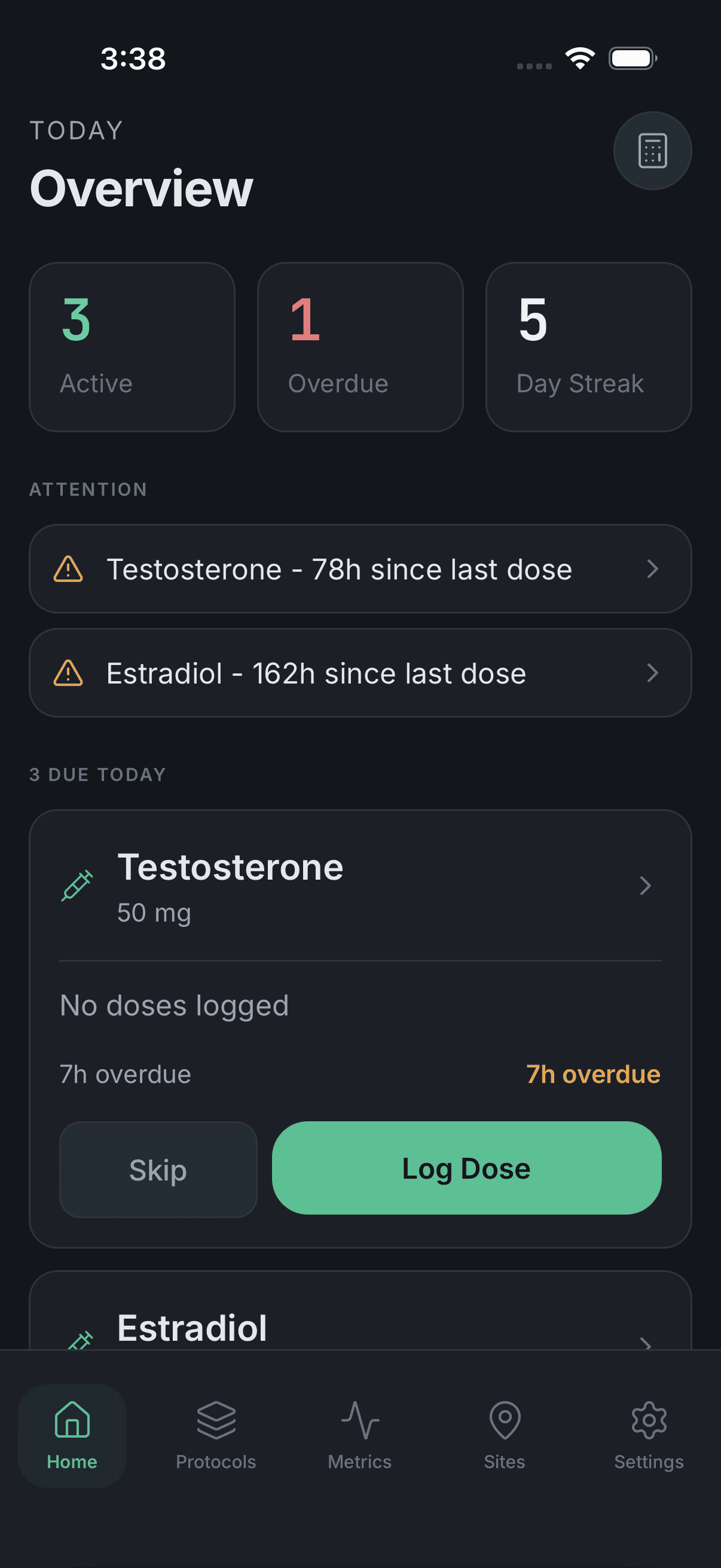
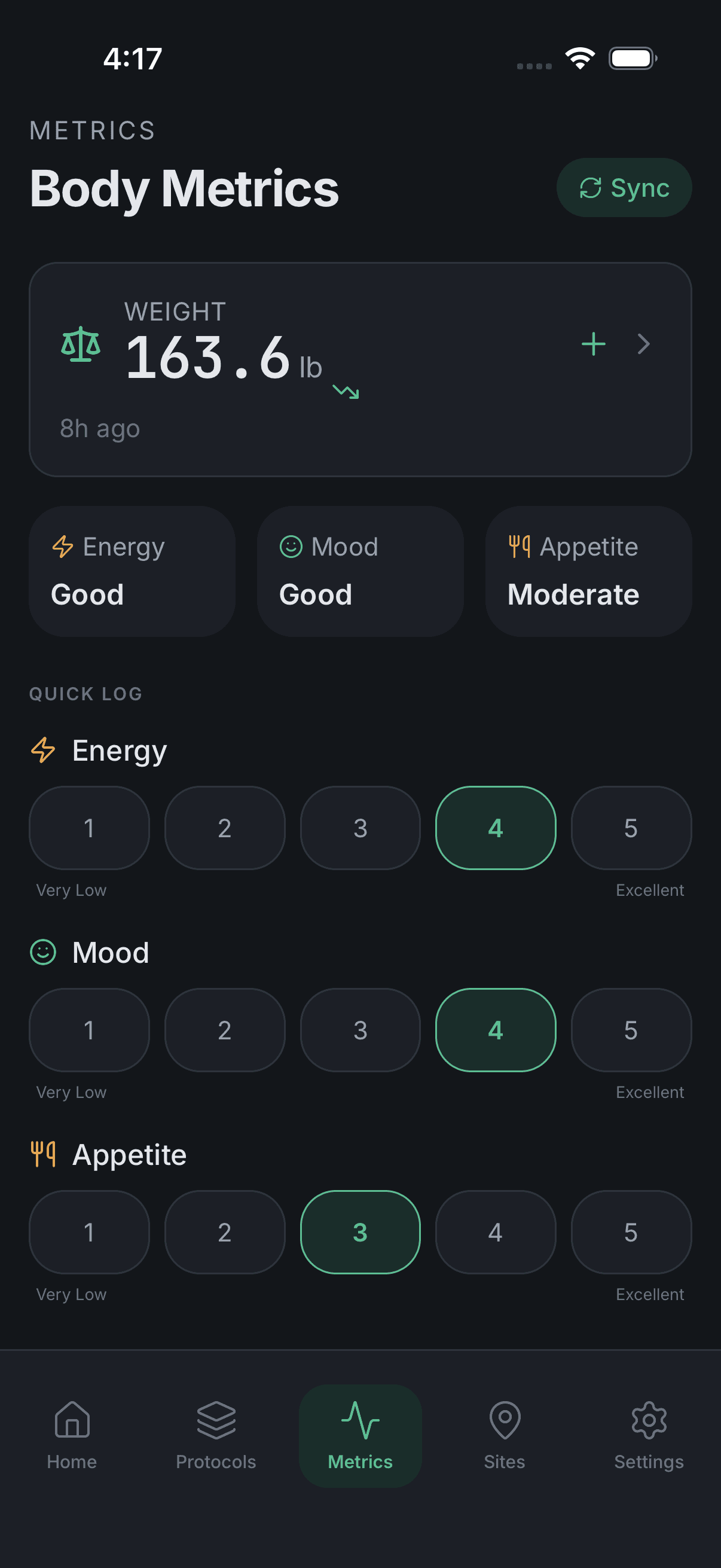
Done Dose was built for exactly this kind of treatment — where consistency, timing, and tracking aren't optional, they're the difference between results that last and results that fade. With one-tap dose logging, injection site rotation tracking, structured side effect logging, and a complete adherence history you can share with your clinician, it turns the complexity of a semaglutide regimen into a system you can actually maintain. Whether you're in week one of titration or month twelve of maintenance, Done Dose keeps you on track. Start tracking your semaglutide regimen with Done Dose.