GLP-1 Medications
Tirzepatide (Mounjaro/Zepbound): How It Works, Results, and What to Track
A guide to tirzepatide (Mounjaro, Zepbound) — dual GIP/GLP-1 mechanism, SURMOUNT and SURPASS trial results, dosing schedule, side effects, and tracking your treatment.
On this page
- How Tirzepatide Works: The Dual Agonist Difference
- The Clinical Evidence: SURPASS and SURMOUNT Trials
- SURPASS Trials (Type 2 Diabetes)
- SURMOUNT Trials (Obesity and Weight Management)
- Dosing Schedule: How Titration Works
- Side Effects: What to Expect and When
- Tracking Your Treatment: Why It Matters More Than You Think
- Making Tirzepatide Work Long-Term
- Frequently Asked Questions
- How much weight can you lose on tirzepatide?
- What is the difference between Mounjaro and Zepbound?
- How often do you inject tirzepatide?
- What are the most common side effects of tirzepatide?
- Can you take tirzepatide if you don't have diabetes?
If you've been paying attention to the weight-loss and diabetes medication landscape over the past few years, you've almost certainly heard about tirzepatide. Sold as Mounjaro for type 2 diabetes and Zepbound for chronic weight management, it arrived with clinical trial numbers that made even seasoned endocrinologists sit up and take notice. We're talking about average weight loss exceeding 20% of body weight in some study arms — results that were, until very recently, only achievable through bariatric surgery. But behind the headlines and the breathless social media posts, there's a real medication with a real mechanism, a specific dosing schedule, genuine side effects, and practical considerations that matter if you're actually taking it. This guide walks through all of it.
How Tirzepatide Works: The Dual Agonist Difference
Most GLP-1 medications — semaglutide being the best-known example — work by activating a single hormone receptor. Tirzepatide does something different. It's a dual GIP/GLP-1 receptor agonist, meaning it activates two incretin hormone pathways simultaneously.
Here's why that matters in plain language:
GLP-1 (glucagon-like peptide-1) slows gastric emptying, promotes insulin secretion when blood sugar is elevated, and reduces appetite through signals to the brain. If you've read about semaglutide, you're already familiar with this pathway. It's the engine behind the "food noise" reduction that so many people describe.
GIP (glucose-dependent insulinotropic polypeptide) is the less famous partner, but it's pulling significant weight. GIP enhances insulin sensitivity, appears to improve fat metabolism, and may amplify the appetite-suppressing effects of GLP-1 signaling. In preclinical research, GIP receptor activation also showed effects on energy expenditure and fat storage patterns.
The way I think about it: GLP-1 turns down your appetite and helps manage blood sugar. GIP adds a second lever — influencing how your body processes and stores energy. Together, they create a metabolic effect that neither pathway achieves alone.
This dual mechanism is what separates tirzepatide from single-pathway GLP-1 drugs and likely explains why the clinical trial results were as strong as they were. It's also why researchers are continuing to explore multi-agonist approaches, including retatrutide, which adds a third receptor target.
The Clinical Evidence: SURPASS and SURMOUNT Trials
Let's get into the data that put tirzepatide on the map. Two major trial programs tell the story — SURPASS for type 2 diabetes and SURMOUNT for obesity and weight management.
SURPASS Trials (Type 2 Diabetes)
The SURPASS program included multiple Phase 3 trials evaluating tirzepatide in adults with type 2 diabetes. The results were consistently strong across different comparators:
SURPASS-1 tested tirzepatide as a standalone therapy (monotherapy) against placebo. Participants on the 15 mg dose saw an average HbA1c reduction of 2.07% and lost an average of 9.5 kg (about 21 lbs) over 40 weeks. For context, HbA1c reductions of that magnitude were remarkable for a single agent.
SURPASS-2 was the trial that generated the most discussion, because it put tirzepatide head-to-head against semaglutide 1 mg. At all three doses (5 mg, 10 mg, and 15 mg), tirzepatide produced significantly greater HbA1c reductions and significantly more weight loss than semaglutide. The 15 mg tirzepatide group lost an average of 12.4 kg compared to 6.2 kg with semaglutide 1 mg. For a side-by-side breakdown of how these two medications compare in practice, see our Ozempic vs Mounjaro comparison.
SURPASS-2 was the moment tirzepatide went from "promising new drug" to "potential best-in-class." Head-to-head superiority against the most popular GLP-1 on the market got everyone's attention — clinicians and patients alike.
SURMOUNT Trials (Obesity and Weight Management)
The SURMOUNT program studied tirzepatide specifically for weight management in adults without diabetes.
SURMOUNT-1 was the landmark trial. Over 72 weeks, participants on tirzepatide 15 mg lost an average of 22.5% of their body weight. Even the lowest dose group (5 mg) averaged 15% weight loss. To put that in perspective, the 5 mg group's results alone outperformed what most obesity medications had achieved at any dose.
SURMOUNT-2 focused on adults with obesity who also had type 2 diabetes — a population that historically loses less weight with any intervention. Even here, the 15 mg group achieved 14.7% average weight loss over 72 weeks.
SURMOUNT-3 and SURMOUNT-4 explored tirzepatide combined with intensive lifestyle intervention and the effects of treatment withdrawal, respectively. SURMOUNT-4 was particularly revealing: participants who switched from tirzepatide to placebo regained a significant portion of their lost weight, reinforcing that this medication works best as an ongoing therapy rather than a short course.

Dosing Schedule: How Titration Works
Tirzepatide follows a structured dose-escalation schedule designed to minimize gastrointestinal side effects. You don't start at the target dose — you work your way up. Here's the standard titration:
| Week | Dose | Notes |
|---|---|---|
| Weeks 1–4 | 2.5 mg | Starting dose. Not a therapeutic target — purely for tolerability. |
| Weeks 5–8 | 5 mg | First potential maintenance dose for some patients. |
| Weeks 9–12 | 7.5 mg | Intermediate step. Clinician assesses response and tolerability. |
| Weeks 13–16 | 10 mg | Common maintenance dose for many patients. |
| Weeks 17–20 | 12.5 mg | Further escalation if needed. |
| Week 21+ | 15 mg | Maximum dose. Used when additional efficacy is needed and tolerated. |
Each step lasts a minimum of four weeks before increasing. Your prescriber may hold you at a given dose longer if side effects are bothersome or if you're responding well at a lower dose. Not everyone needs to reach 15 mg — the right dose is the one that balances effectiveness with tolerability for your specific situation. Our Mounjaro dosage guide goes deeper on the practical details of each titration step and what to expect at each dose level.
Injection day flexibility: Tirzepatide is injected once weekly. You should pick a consistent day, but you can change it as long as at least 72 hours have passed since your last injection. The injection itself is subcutaneous — typically in the abdomen, thigh, or upper arm. If you're managing injection sites, a solid injection site rotation guide will help you avoid tissue irritation and maintain consistent absorption.
Don't rush the titration. I know it's tempting to jump to higher doses faster, especially when you see other people's results online. But the escalation schedule exists for a reason — your body needs time to adjust, and pushing through severe nausea doesn't make the medication work better. It just makes you miserable.
Side Effects: What to Expect and When
The side-effect profile of tirzepatide is dominated by gastrointestinal symptoms, particularly during dose escalation. Here's what the clinical data and real-world experience consistently show:
Common (reported in more than 10% of participants):
- Nausea — the most frequently reported side effect, most pronounced in the first few weeks at each new dose level
- Diarrhea
- Decreased appetite (which is also, in some sense, the intended effect)
- Vomiting
- Constipation
Less common but notable:
- Injection site reactions
- Fatigue
- Abdominal pain
- Hair thinning (reported anecdotally and in post-marketing observations, often associated with rapid weight loss rather than the drug itself)
Serious but rare:
- Pancreatitis (patients should report severe, persistent abdominal pain immediately)
- Gallbladder-related events (risk increases with rapid weight loss)
- Tirzepatide carries a boxed warning about thyroid C-cell tumors based on animal studies, though this risk hasn't been confirmed in humans
Most people find that GI side effects peak during the first one to two weeks after each dose increase and then gradually subside. Eating smaller meals, staying well hydrated, and avoiding high-fat or greasy foods during those transition periods can make a meaningful difference in tolerability.
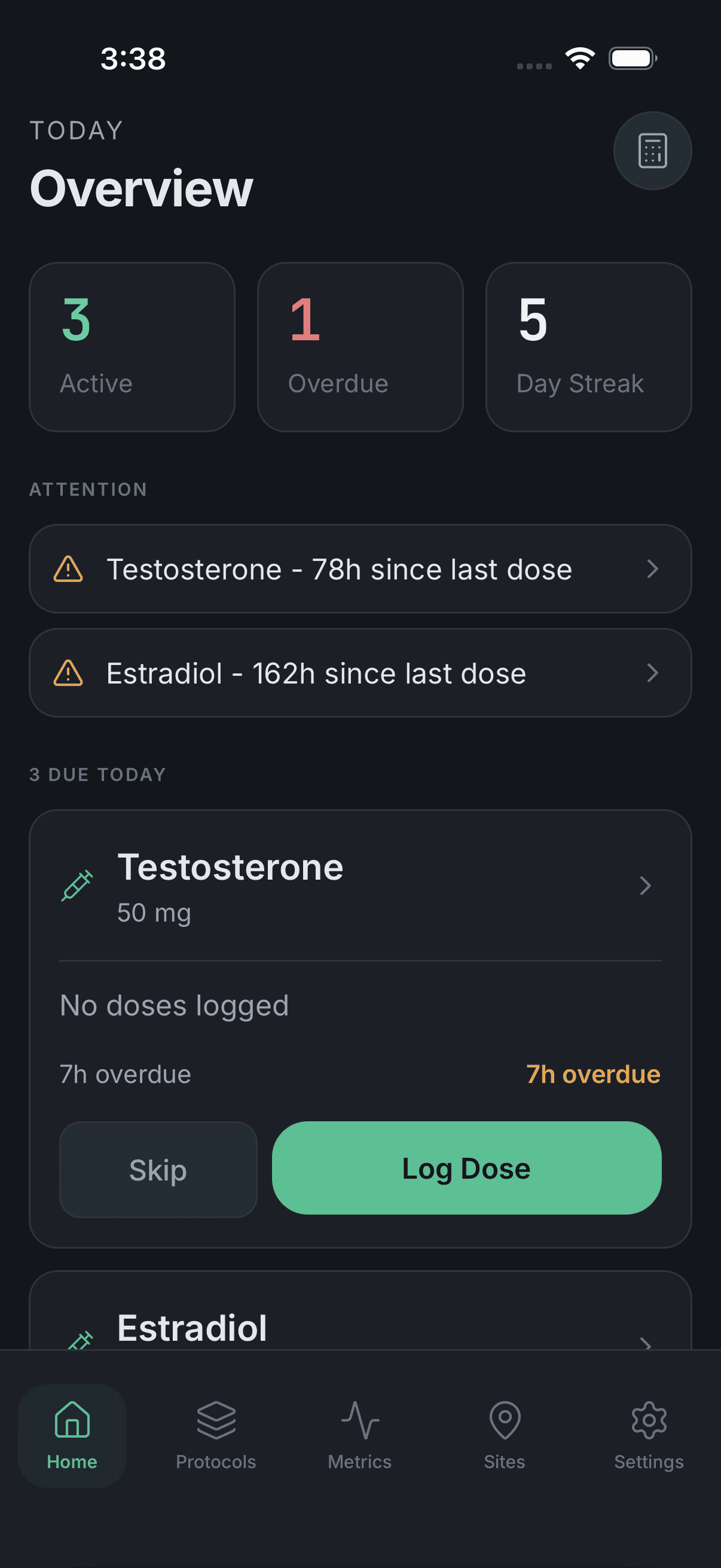
If you're tracking side effects alongside your doses — and you should be — a structured weekly tracking approach helps you spot patterns instead of just reacting to individual bad days. Over time, that log becomes one of the most valuable tools you have for conversations with your prescriber.

Tracking Your Treatment: Why It Matters More Than You Think
Here's something that doesn't get enough attention in the tirzepatide conversation: the people who get the best long-term results tend to be the ones who track consistently. Not obsessively — consistently. There's a difference.
When you're on a weekly injectable with a multi-month titration schedule, important details slip away fast. Which dose are you on? When did you last increase? Which side did you inject last week? Was the nausea worse this month or last month? Did that dietary change actually help with the GI symptoms, or does it just feel like it did?
Your memory is unreliable, especially over months of treatment. A simple log that takes 30 seconds per week will give you better insight into your own response than trying to reconstruct it from memory at your next appointment.
Here's what I'd recommend tracking at minimum:
- Dose date, time, and amount — the foundation of everything else
- Injection site and side — critical for proper site rotation and avoiding lipohypertrophy
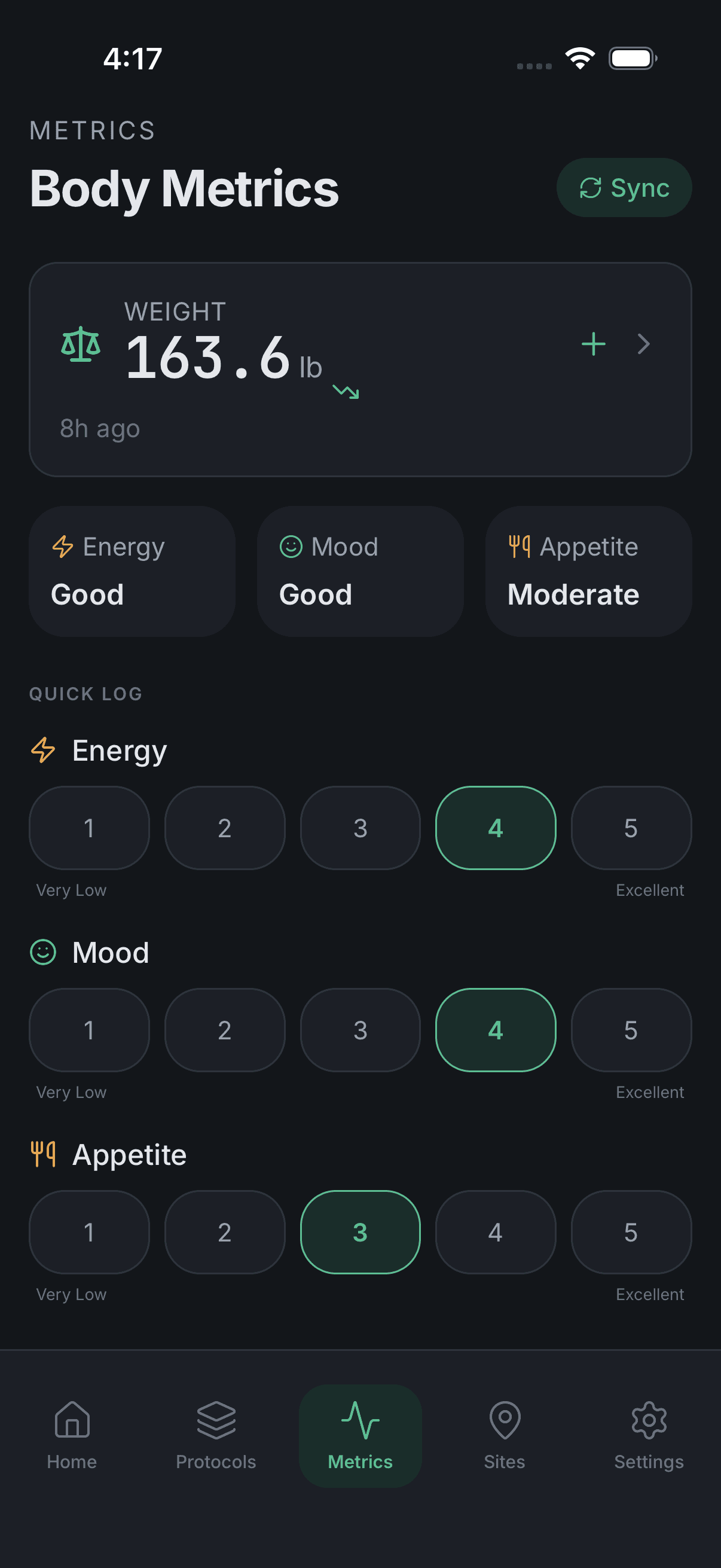
- Side effects and severity — use a simple 0-3 scale so your notes are comparable week to week
- Weight trend — weekly is fine; daily weighing adds noise without clarity
- Notable dietary or lifestyle changes — brief notes only, not a food diary
If you're also taking oral medications alongside tirzepatide — metformin is a common combination for people with type 2 diabetes — you'll want a system that handles both. Our guide on combining oral and injectable medication tracking walks through how to manage a multi-medication regimen without drowning in paperwork.
And if you miss a dose? It happens. The key is having a plan for it rather than panicking. The prescribing information says that if a dose is missed, it should be administered as soon as possible within four days (96 hours) of the missed dose. If more than four days have passed, skip the missed dose and resume on your regular schedule. A missed dose log helps you document what happened and keep your record accurate for your clinician.
Making Tirzepatide Work Long-Term
The SURMOUNT-4 data made one thing very clear: stopping tirzepatide leads to weight regain for most people. That's not a failure of willpower — it's biology. The hormonal signals that tirzepatide modulates don't permanently reset. When the medication stops, appetite and metabolic patterns tend to return toward baseline.
This means that for many people, tirzepatide is a long-term commitment. And long-term commitments require long-term systems. The people who sustain their results are the ones who build structure around their treatment:
- They have a consistent injection day and time anchored to a weekly routine
- They use a tracking tool that logs doses, sites, and symptoms without friction
- They keep their prescriber informed with real data, not vague impressions
- They pair the medication with protein-focused nutrition and resistance training to preserve lean mass
- They treat side-effect management as an active process, not something to just endure
A medication schedule template can be a good starting point if you're building this structure from scratch, especially if tirzepatide is part of a broader regimen. And if you find yourself forgetting doses or losing track of your rotation, a dedicated reminder app that supports weekly injectables — not just daily pills — can close the gap between intention and execution.

Frequently Asked Questions
How much weight can you lose on tirzepatide?
In the SURMOUNT-1 trial, participants on the highest dose (15 mg) lost an average of 22.5% of their body weight over 72 weeks. The 10 mg group averaged about 19.5%, and even the 5 mg group averaged 15%. Individual results vary significantly based on dose, adherence, diet, exercise, and starting weight.
What is the difference between Mounjaro and Zepbound?
Both contain the same active ingredient — tirzepatide — manufactured by Eli Lilly. Mounjaro is FDA-approved for improving blood sugar control in adults with type 2 diabetes. Zepbound is FDA-approved for chronic weight management in adults with obesity (BMI 30+) or overweight (BMI 27+) with at least one weight-related comorbidity. The medication is identical; the indication and insurance coverage differ.
How often do you inject tirzepatide?
Once weekly, on the same day each week. You can adjust your injection day if needed, provided at least 72 hours have passed since your last dose. The injection is subcutaneous — abdomen, thigh, or upper arm are the standard sites.
What are the most common side effects of tirzepatide?
Gastrointestinal symptoms lead the list: nausea, diarrhea, decreased appetite, vomiting, and constipation. These are most common during the first few weeks at each new dose level during titration and typically improve as your body adjusts. Eating smaller meals and staying hydrated can help.
Can you take tirzepatide if you don't have diabetes?
Yes. Zepbound is specifically approved for chronic weight management in adults without diabetes who meet the BMI criteria (30+, or 27+ with a weight-related comorbidity like hypertension, dyslipidemia, or obstructive sleep apnea).
Done Dose was built to make tracking treatments like tirzepatide simple and sustainable. One-tap dose logging, injection site rotation tracking, adherence history you can actually show your prescriber, and smart reminders that work for weekly injectables — not just daily pills. Whether you're starting your first 2.5 mg dose or maintaining on 15 mg, it's designed to keep your treatment on track without adding complexity to your routine. See how Done Dose can help you manage your tirzepatide regimen.