
How to Inject Testosterone: Step-by-Step Self-Injection Guide
How to inject testosterone correctly: drawing the dose, choosing a site, injecting subcutaneously or intramuscularly, and avoiding the mistakes that bruise, leak, or hurt.
Published 2026-05-03Updated 2026-05-0311 min read
By Ben — Builder of DoneDose, software engineer and peptide user
If you're staring at your first vial of testosterone cypionate or enanthate wondering exactly what to do, you're in the right place. How to inject testosterone is one of those skills that feels intimidating until you've done it twice -- then it becomes a five-minute Sunday-morning routine you barely think about. This guide walks through everything from setting up your supplies to choosing a site, drawing the dose, doing the injection, and tracking it afterward so the next one goes smoother.
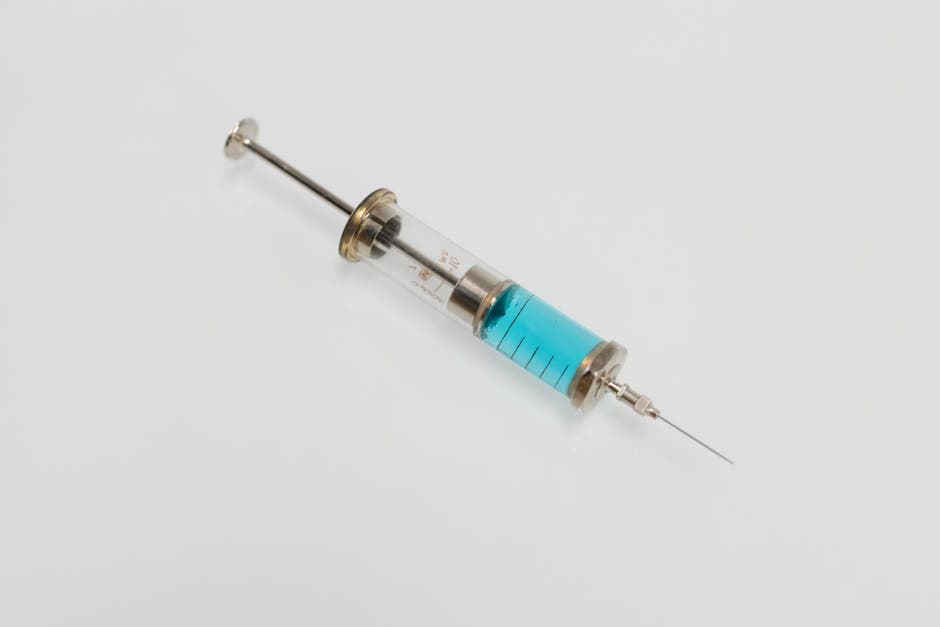
Before Your First Injection: What You Need
Your TRT clinic or pharmacy should have walked you through this, but a lot of guys end up self-teaching from a 30-second video and a printout. Here's everything you actually need on hand before you start.
| Item | Purpose | Notes |
|---|---|---|
| Testosterone vial | The medication | Cypionate, enanthate, or propionate -- your prescription |
| Syringes | Holds and delivers the dose | 1 mL or 3 mL with luer-lock; insulin syringes for SubQ |
| Draw needles (optional) | Pull oil out of the vial | 18g--21g, 1.5" -- thicker is faster |
| Injection needles | Goes into your body | 22g--25g, 1" or 1.5" for IM; 25g--31g, 1/2" for SubQ |
| Alcohol swabs | Sterilize the vial top and skin | Single-use prep pads |
| Sharps container | Safe disposal | FDA-approved, never improvise |
| Cotton ball or gauze | Brief post-injection pressure | Helps with the occasional drop of blood |
| Bandage (optional) | Cover the site if needed | Most people don't bother |
Two notes that matter. First, never reuse needles. Beyond infection risk, the tip dulls after a single injection and makes the next one significantly more painful. Second, don't inject cold oil. Pull the vial out of the cabinet 15 minutes before you draw -- or roll the syringe in your hands once it's loaded -- so the oil is at body temperature. Cold oil stings, and cold oil moves more slowly through the needle.
Step 1: Wash, Set Up, and Inspect
Wash your hands with soap and water for at least 20 seconds. Lay out everything you need on a clean, dry surface -- not a bathroom counter where toothbrushes live, ideally. Open the alcohol swabs but leave the syringes in their packaging until you're ready to use them.
Before you draw anything, inspect the vial:
- The oil should be clear, not cloudy or particulate
- Check the expiration date
- The rubber stopper should be intact, not cracked or punctured all the way through
- If anything looks off, set it aside and use a different vial -- don't inject something you're not sure about
Wipe the rubber top of the vial with a fresh alcohol swab and let it air-dry for 10--15 seconds. Don't blow on it -- you're just adding bacteria back.
Step 2: Draw the Dose
This is where most beginners feel awkward. The technique is the same whether you're going IM or SubQ; only the needles differ.
- Attach the draw needle to your syringe. If you're using a single needle for both draw and inject, skip this swap.
- Pull air into the syringe equal to your dose. This pre-pressurizes the vial so the oil flows out easily.
- Invert the vial, insert the needle through the rubber, and push the air in. You'll feel resistance ease.
- Pull the plunger back to slightly more than your dose. The oil will flow with steady backward pressure -- don't yank.
- Tap the side of the syringe to send any air bubbles to the top, then push them back into the vial. Bring the plunger down to your exact dose line.
- Withdraw the needle from the vial.
If you're swapping to a thinner injection needle, do it now. Hold the syringe vertical, pop off the draw needle's cap (or use a one-handed scoop technique), screw on the new needle, and prime out the tiny bit of air at the tip with a couple of drops of oil.
Don't worry about a single tiny bubble. A 0.05 mL air bubble in subcutaneous tissue is harmless. The dramatic warnings about air embolisms apply to IV injections, not IM or SubQ. That said, get rid of bubbles you can see -- they crowd out medication and create inconsistent dosing.
Step 3: Choose Your Site
Site choice depends on your route. If you're not sure yet whether to go subcutaneous or intramuscular, our SubQ vs IM testosterone comparison walks through the tradeoffs in detail.
Intramuscular (IM) sites:
- Ventrogluteal -- upper outer hip. Considered the safest IM site by most modern injection guidelines. Far from major nerves and vessels, deep muscle, minimal scar tissue with rotation. Slightly awkward to reach without a mirror at first.
- Vastus lateralis -- outer thigh, roughly midway between hip and knee. Easy to see, easy to reach, plenty of muscle. Some find it more sore the next day than ventrogluteal.
- Deltoid -- upper outer arm, about three finger-widths below the shoulder bone. Convenient for small volumes only (0.5 mL or less). Easy to reach with the opposite hand.
- Dorsogluteal -- upper outer buttock. The traditional spot, but harder to reach safely on yourself and closer to the sciatic nerve. Most TRT guides now steer people toward ventrogluteal instead.
Subcutaneous (SubQ) sites:
- Abdomen -- about two inches away from the navel in any direction. Lots of available area, easy to pinch, very tolerant of frequent injections.
- Outer thigh fat -- the soft area on the outer/upper thigh, not the muscle.
- Upper arm fat -- the back of the arm, between the shoulder and elbow.
- Love handle / flank -- the soft area on the side of the lower back. Some prefer this for daily SubQ.
Whatever you choose, rotate between sites. Repeated injections in the same spot cause scar tissue (called fibrosis or lipohypertrophy) that changes how oil absorbs and makes the area harder to inject over time. Our TRT injection log and site rotation guide covers a simple rotation pattern that keeps every site rested between uses.
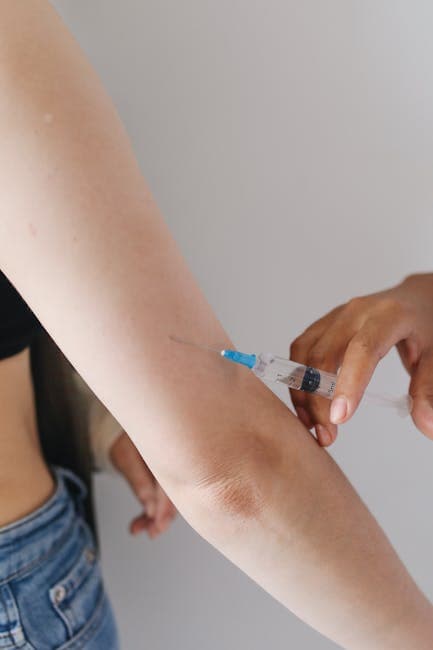
Step 4: The Injection
You're set up, your dose is drawn, your site is chosen. Now the actual injection. The technique differs slightly between IM and SubQ.
Intramuscular Injection
- Swab the site with alcohol in a circular motion outward and let it air-dry. Wet alcohol stings going in.
- Spread the skin taut with the thumb and index finger of your non-injecting hand. (Or use the Z-track method below if you've been taught it.)
- Insert the needle at a 90-degree angle in one smooth, decisive motion. A slow needle hurts more than a quick one.
- Push the plunger slowly -- about 10 seconds for 1 mL is a good pace. Pushing too fast splits tissue and causes more soreness.
- Pause for 5--10 seconds with the needle in place once the plunger is fully down. This lets the muscle accept the oil and reduces leakage.
- Withdraw the needle at the same angle you entered.
- Apply gentle pressure with a cotton ball or gauze. Don't massage -- it can spread the oil and worsen soreness.
The Z-track method is worth knowing: instead of just spreading the skin, you pull it about an inch to one side before inserting. After injecting and removing the needle, you let the skin snap back. This creates an offset path through tissue that helps trap the oil in muscle and minimize leakage to the surface. It's especially useful for thicker, irritating compounds.
Subcutaneous Injection
- Swab the site and let it dry.
- Pinch up a fold of skin and fat with your non-injecting hand. This lifts the fat layer away from the underlying muscle.
- Insert the needle at a 45 to 90-degree angle depending on the needle length and how much fat you have. With a 5/8" needle and minimal body fat, 45 degrees is safer.
- Push the plunger slowly -- 5--10 seconds for the typical SubQ volume.
- Pause briefly before withdrawing.
- Release the pinch and apply gentle pressure with cotton.
SubQ injections are forgiving. Almost everyone reports them as easier and less painful than IM. The smaller needle does most of the work.
Step 5: Dispose, Log, and Move On
Drop the entire syringe and needle into your sharps container as a single unit. Don't recap the needle -- the recap motion is responsible for most accidental needle sticks. If you absolutely have to recap, use the one-handed scoop technique (slide the cap onto a flat surface, then guide the needle in without your other hand near the tip).
Then log the injection. This is where most people get sloppy and where DoneDose actually pays off. You want to capture:
- Date and time of the injection
- Site -- which side, which area (e.g., right vastus lateralis)
- Dose in mg or mL
- Anything notable -- bleeding, pain, leakage, soreness from a previous site
The reason this matters isn't compliance theater. It's that three months from now, when you're getting bloodwork drawn and trying to figure out whether your protocol needs adjusting, the timing of your last injection relative to the draw is one of the most important variables. If you can't tell your provider the exact date and time, they're guessing along with you. Our TRT bloodwork guide covers why trough timing matters and how lab interpretation depends on accurate injection records.
Common Mistakes to Avoid
After watching a lot of people learn this skill, the same handful of mistakes show up repeatedly. None are catastrophic, but every one of them makes injections more uncomfortable than they need to be.
- Injecting cold oil. Let it warm to room temperature. Cold oil stings and pushes hard.
- Using a dull or reused needle. A new needle slides in painlessly. A reused one tears tissue.
- Pushing too fast. Rushing the plunger creates pressure pockets, increases leakage, and produces post-injection soreness that can last days.
- Not rotating sites. Hitting the same spot every week builds scar tissue. Within months, the area becomes harder to inject and absorbs less consistently.
- Inserting slowly. A slow needle is a painful needle. Once you commit, go in smoothly.
- Forgetting to log. The next bloodwork conversation is twice as productive when you have actual injection data, not a vague "I think it was Wednesday."
- Hitting wet alcohol. Always let the prep pad dry. Wet alcohol stings and isn't actually doing more disinfection than a dry swab.
- Reusing draw needles. The blunting from punching the rubber stopper is enough to make the next stick noticeably worse.
A Note on Frequency and Volume
How often you inject and how much you inject per dose depend on your prescription, your testosterone ester, and your protocol. Cypionate and enanthate (the two most common TRT esters) have similar half-lives of about 7--8 days, which is why most TRT protocols are once weekly, twice weekly, or every other day. Our testosterone cypionate half-life guide covers the pharmacokinetics in detail.
The general principle: smaller, more frequent injections produce more stable blood levels with less variation between peak and trough. That's why a lot of modern TRT protocols have moved from "200 mg once a week" to "100 mg twice a week" or "60 mg every other day SubQ." The total weekly dose is the same, but the curve is flatter. Whether that matters for you depends on how you feel and what your bloodwork looks like.
Use a testosterone dose calculator to figure out how many mL corresponds to your prescribed mg dose -- the math is straightforward but easy to mess up the first time, and a 0.1 mL error can be the difference between 100 mg and 120 mg per injection.
When to Call Your Provider
Self-injection is routine, but a few things warrant a phone call:
- Persistent, increasing pain at an injection site beyond a few days
- Redness, warmth, or swelling that's spreading -- could indicate an infection
- A hard, painful lump that doesn't resolve over a couple of weeks
- Fever, chills, or feeling unwell after an injection
- Significant bleeding that doesn't stop with brief pressure
- Allergic-type reactions -- itching, hives, breathing difficulty
Bruising at the site, a small drop of blood, brief stinging, and 24--48 hours of mild soreness are all normal and not reasons to call. Distinguishing routine from worrying gets easier after a few months.
Self-injecting testosterone becomes routine faster than most people expect. The first one is awkward; the tenth one is second nature. What separates a smooth long-term TRT experience from a frustrating one isn't the technique itself -- it's whether you have a reliable system for tracking what you injected, where, and when. That's what makes bloodwork conversations productive, lets you spot trends early, and keeps your sites in good shape over years of treatment. DoneDose was built for exactly this -- weekly schedules, site rotation, multi-medication support, and a log you can actually pull up at a doctor's appointment.