
Subcutaneous Injection Technique: Step-by-Step Guide
How to give a subcutaneous (SubQ) injection step by step: choosing sites, needle size, pinch and angle, injecting slowly, aftercare, and the common mistakes to avoid.
Published 2026-05-28Updated 2026-05-2811 min read
By Ben — Builder of DoneDose, software engineer and peptide user
Medically reviewed by Robert Cauthorne, MD, on July 7, 2026.
Educational content only. This guide is not medical advice and does not replace training from a licensed clinician. If you've been prescribed an injectable medication, have your provider or pharmacist demonstrate the technique before your first self-injection.
On this page
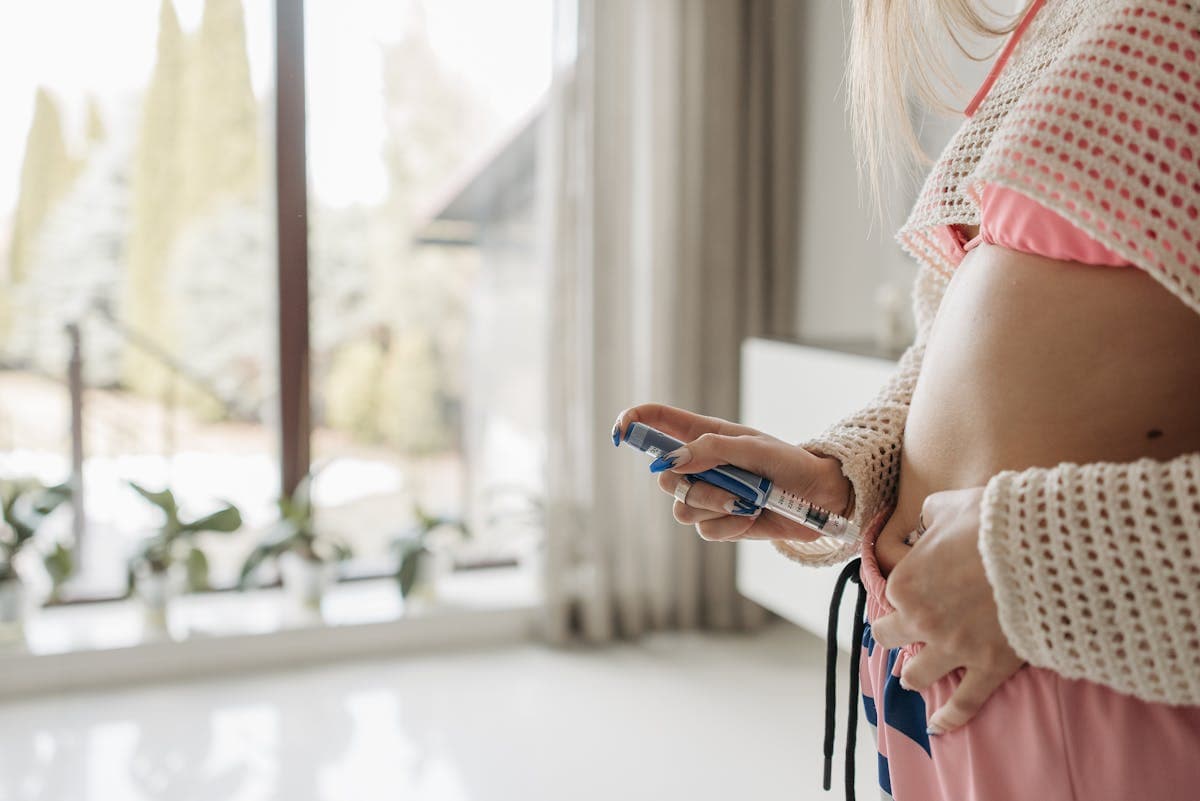
A subcutaneous injection puts medication into the layer of fat just under your skin -- the "SubQ" space between skin and muscle. It's the most common self-injection route, used for insulin, GLP-1 medications, most peptides, low-dose testosterone, fertility drugs, and many biologics. The technique is simple, low-pain, and quick to learn.
This guide walks through it step by step: where to inject, what needle to use, how to handle the pinch and the angle, and the handful of mistakes that account for most problems.
Quick Reference
- Target: the fat layer just under the skin -- not muscle.
- Needle: short and fine -- typically 29-31 gauge, 4-8 mm (up to 1/2 inch).
- Sites: abdomen, front/outer thigh, back of upper arm, flanks.
- Angle: 90 degrees with a pinch and a short needle; 45 degrees if very lean.
- Aspiration: not needed for SubQ.
- Rotate sites every injection.
What "Subcutaneous" Actually Means
Your skin sits on top of a layer of subcutaneous fat, which sits on top of muscle. A subcutaneous injection deposits medication into that fat layer, where it absorbs slowly and steadily because the tissue has a modest blood supply. That slow absorption is the point -- it's why insulin, GLP-1 drugs, and peptides are given this way rather than into muscle or vein.
Because you're aiming for a shallow layer, SubQ injections use short, thin needles and are far less intimidating than the longer-needle intramuscular injections used for things like testosterone enanthate. If you've only ever pictured a long needle going deep into a muscle, a SubQ injection is nothing like that.
Supplies You Need
| Item | Notes |
|---|---|
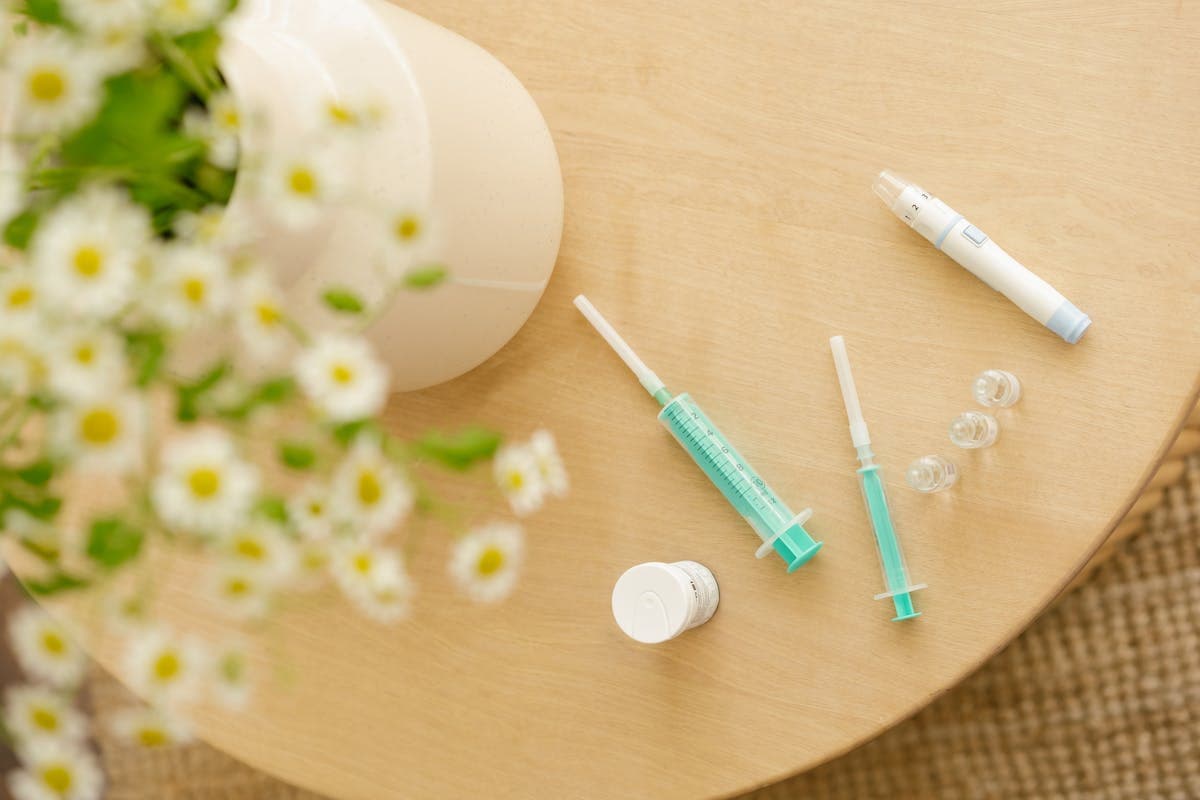
| Syringe or pen | Insulin syringe (1 mL / 100-unit) or a prefilled pen with a fine pen needle |
| Needle | 29-31 gauge, 4-8 mm (or up to 1/2 inch). Higher gauge = thinner = less pain |
| Alcohol swabs | Single-use, to clean the site |
| Cotton ball or gauze | Light pressure after the injection |
| Sharps container | FDA-approved; never reuse or recap loose needles into the trash |
Tip: For SubQ, you do not need a long needle. A 4-8 mm needle reaches the fat layer in nearly everyone, and a shorter needle lowers the risk of accidentally hitting muscle. Thinner (higher-gauge) needles hurt less, which matters a lot when you're injecting daily.
Choosing and Rotating Your Site
The standard subcutaneous sites all have a dependable fat layer:
- Abdomen -- the most popular and easiest to pinch. Stay at least two inches from the navel.
- Front and outer thigh -- easy to reach seated, good for self-injection.
- Back of the upper arm -- works well but hard to pinch on yourself; easier with help.
- Flanks ("love handles") -- comfortable and often underused, great for expanding your rotation.
Rotate every single injection. Repeating the same spot causes irritation, bruising, and eventually lipohypertrophy -- firm lumps of thickened tissue that absorb medication unpredictably, so your dose stops landing consistently.
Move at least an inch from your last injection, work systematically across one region, and switch regions regularly. For drug-specific rotation patterns, see the GLP-1 injection site rotation guide and peptide injection sites.
Step-by-Step Technique
- Wash your hands thoroughly with soap and water.
- Prepare your dose. Draw up the medication or prime your pen per its instructions. If you're reconstituting a peptide first, the peptide reconstitution guide covers that step.
- Choose a site you haven't used recently, and clean it with an alcohol swab in a small circular motion. Let it air-dry for 10-15 seconds -- injecting through wet alcohol stings.
- Pinch a fold of skin and fat between your thumb and forefinger, lifting it gently away from the underlying muscle. The pinch creates a clear target and keeps the needle out of muscle.
- Insert the needle with a quick, smooth motion. With a short needle and a pinch, 90 degrees is standard. If you're very lean or using a longer needle, use a 45-degree angle to stay out of muscle.
- Push the plunger slowly and steadily to deliver the full dose. A slow push is more comfortable and reduces leakage and stinging.
- Pause briefly (a couple of seconds) so the medication settles, then withdraw the needle at the same angle you inserted it.
- Release the pinch and press lightly with a cotton ball or gauze. Don't rub -- rubbing can irritate the site and cause the medication to leak back out.
- Dispose of the needle immediately in your sharps container. Never recap a used needle by hand.
That's the entire procedure. With practice it takes under a minute.
Do You Need to Aspirate?
No. Aspiration -- pulling back on the plunger before injecting to check for a blood return -- is a technique associated with some intramuscular injections, and even there it's increasingly considered unnecessary. For subcutaneous injections it is not recommended. The SubQ fat layer has few large blood vessels, and current guidance from injection-technique authorities does not call for aspiration in SubQ. Insert and inject.
Comfort: How to Make It Hurt Less
SubQ injections are low-pain by nature, but a few habits make them nearly painless:
- Let the alcohol dry completely before injecting. Wet alcohol on the needle is the most common source of unnecessary sting.
- Use the thinnest needle appropriate for your medication. A 31-gauge needle is barely felt by most people.
- Inject at room temperature when possible. Cold medication straight from the fridge stings more -- let a pen or syringe sit out for a few minutes (follow your drug's storage rules).
- Insert quickly, push slowly. A fast needle entry and a slow medication push is the most comfortable combination.
- Relax the muscle under the site. Tension makes everything sharper.
- Avoid hair follicles, veins, moles, scars, and bruises.
How Much Volume Can Go Subcutaneously?
The subcutaneous space comfortably accepts up to about 1 mL in one spot; smaller volumes are more comfortable and absorb better. Most self-injected medications are well under this -- a peptide dose might be a fraction of a milliliter. If your prescribed volume is larger than about 1 mL, your provider may have you split it across two sites. This is one reason a more concentrated mix (less water at reconstitution) can be more comfortable.
Common Mistakes
- Injecting into the same spot repeatedly. The single biggest long-term mistake -- it causes lumps and erratic absorption. Rotate.
- Injecting through wet alcohol. Let it dry first.
- Going too deep. Using a long needle without a pinch can land medication in muscle, which absorbs differently. Pinch and use a short needle.
- Rubbing the site afterward. Press, don't rub.
- Recapping or tossing loose needles. Always use a sharps container.
- Reusing needles. Needles dull and pick up contamination after one use. One needle, one injection.
- Skipping the slow push. Fast injection stings and can cause leakage at the surface.
When to Call Your Provider
Subcutaneous injections are very safe, but contact your provider if you notice:
- Signs of infection at a site -- spreading redness, warmth, swelling, pus, or fever.
- A hard lump that doesn't resolve, or an area that's becoming consistently lumpy.
- Significant bleeding or a large bruise after an injection.
- An allergic reaction -- hives, widespread itching, swelling, or trouble breathing (seek emergency care for breathing problems).
Track What You Inject
Good technique and disciplined rotation depend on remembering where you've been -- which is hard to do from memory once you're injecting regularly across more than one site. DoneDose's visual body map records each injection site and shows which areas are resting and which are ready, so your rotation actually rotates instead of drifting back to two comfortable spots. One tap logs the dose, the site, and the date.
Subcutaneous injection is a skill you'll have down after a handful of reps: clean the site, pinch, insert a short fine needle, push slowly, and rotate every time. The technique is the same whether you're injecting a GLP-1, a peptide, or low-dose testosterone -- only the medication and schedule change. Get the basics clean and consistent, and self-injection stops being something you think about.